Sensemaker Daily

- A pro-Kremlin blogger said Russia’s situation in the Donbas was worsening by the hour (more below).
- India’s worst train crash in decades killed at least 275 people.
- Graham Smith, chief executive of Republic, called the British royal family “tax-funded Kardashians”.
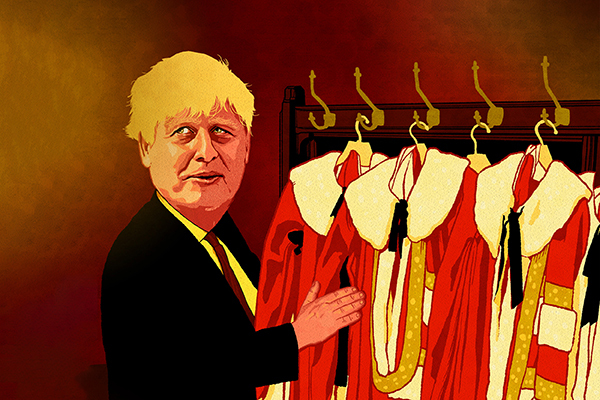
Boris Johnson’s overdue resignation honours list reportedly consists of about 50 names. Some of these people will receive a life peerage and a seat in the House of Lords.
So what? The House of Lords is not a bridge club. It’s the second most important part of Britain’s legislature. By convention, ex-prime ministers nominate lists of new members. Also by convention, serving prime ministers wave them through. Boris Johnson and Liz Truss will both get lists, but both have shown repeated disdain for convention when it suited them and are now relying on others not to. Their hypocrisy could destroy what remains of the system’s credibility.
Approval of Johnson’s resignation honours list has been held up by two main problems: the continuing investigation into his parliamentary statements on Covid lockdown parties (further delayed by recent revelations), and some of the names that appear on it.
Among those expected to receive peerages are:
- Dan Rosenfield, his former chief of staff;
- Sitting MPs and close allies Nigel Adams, Nadine Dorries and Alok Sharma;
- Former aides Ross Kempsell, Ben Gasgoine and Charlotte Owen – all in their late 20s or early 30s; and
- David Ross, a party donor who helped facilitate a family holiday Johnson took on Mustique in 2021, as well as former party co-chair Ben Elliot;
By what rationale are these people being elevated? What have they done to deserve the reward and the responsibility? There is no checklist of attributes, and the authorities have limited power of veto. The only rationale is the whim of the person choosing.
Catalogue of coincidence. The Lords is a “system of patronage that is vulnerable to corruption,” Transparency International’s chief executive Daniel Bruce tells Tortoise.
He also notes the “catalogue of coincidence” that has resulted in 15 of the last 16 Tory treasurers being elevated after donating more than £3 million each.
But Johnson’s list is more complicated than just money. It’s also about unwavering loyalty.
“Presumed contract”. Owen and Kempsell’s reported inclusion is said to be particularly “sticky” because of their age and lack of experience. But they are not the only names causing problems.
As reported last week, Rosenfield’s inclusion provoked so much outrage among his former team that several members lodged complaints about bullying on behalf of more junior colleagues. They later discovered their identities had been revealed to Rosenfield – but their complaint doesn’t seem to have affected his chances of a peerage.
Which points to deeper concerns of an erosion of what little trust remains in politics.
“It’s a distortion of how things should work and a reward for people who haven’t done anything in the national interest,” one source says. “The presumed contract between Dan and Boris – that he won’t say anything, won’t upset the apple cart in return for a peerage – it’s just not good enough.”
Downgraded. Johnson’s list is notable not just for who is on, but for who’s been taken off.
Sources say Guto Harri, the former Downing Street communications chief, was “downgraded” to a CBE even before he began a podcast series in which he’s made uncomfortable claims about Johnson’s behaviour in Number 10, including that he threatened to punch Emmanuel Macron. The expectation is that Harri may be dropped entirely.
Michael Gove, a long-time Johnson frenemy, was due to get a knighthood in recognition of his long ministerial career, even after telling Johnson last summer that he must resign. But he’s said to be off the list now having played a key role in preventing Johnson running for the party leadership a second time after Truss’s dismal 49 days in office.
12 days of Trussmass. Her tenure still apparently warrants a resignation honours list – already approved, but said to be held up by Johnson’s. She is recommending just four names, although that makes one peer for every 12 days of her premiership:
- Mark Littlewood, director general of the Institute of Economic Affairs;
- Jon Moynihan, a businessman and Truss donor;
- Matthew Elliot, chief executive of Vote Leave; and
- Ruth Porter, Truss’s deputy chief of staff.
On their own, four names will make very little difference to the upper chamber, which already has 778 members. Perhaps the same is true of Johnson’s list. But as the criteria for elevation shift further away from public service and towards personal loyalty, the idea that the system is corrupt will only harden.


