Sensemaker Daily


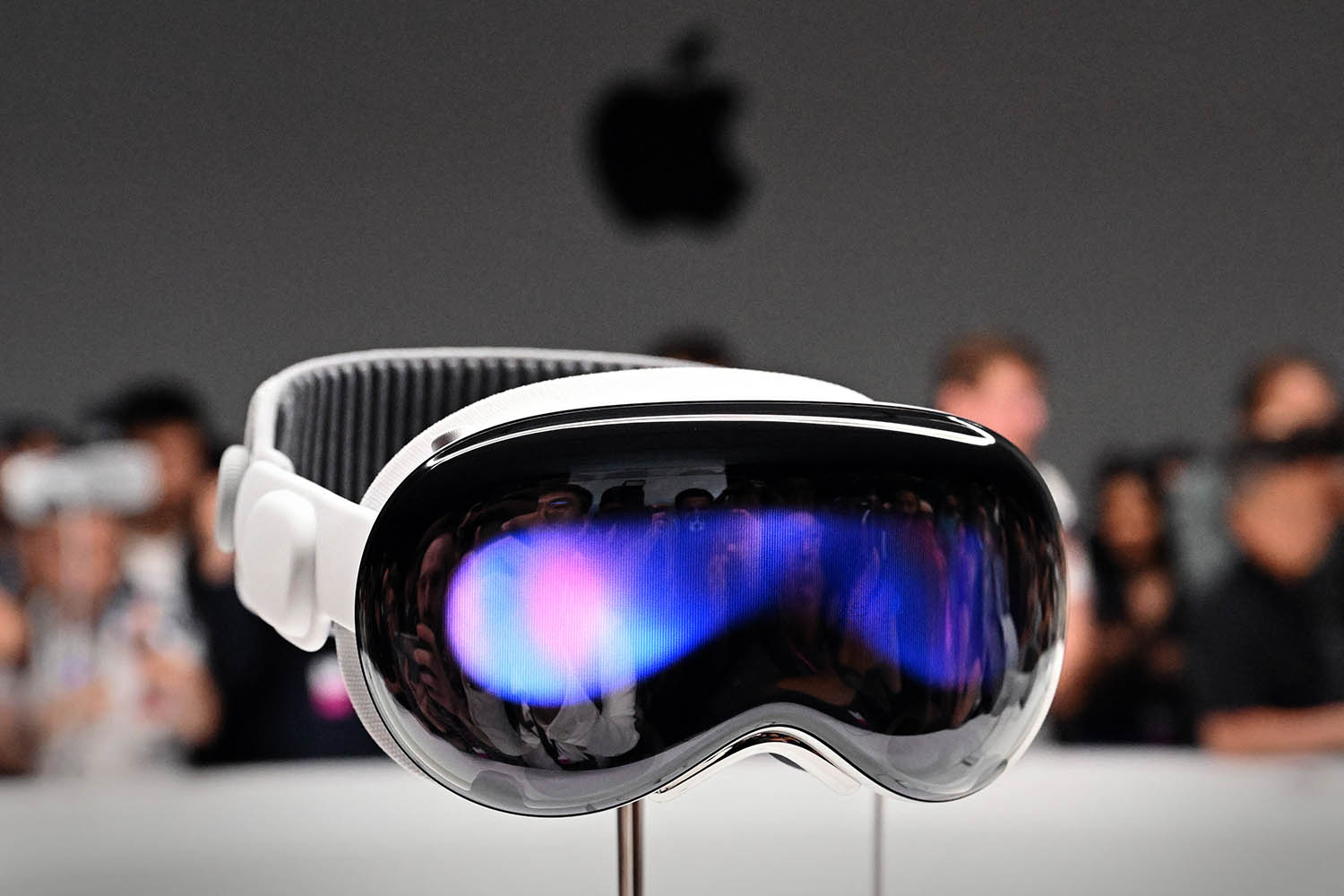
Apple claims to have reinvented personal computing with its long-awaited entry into VR. But how many of us really want to live in goggles?
- A pro-Kremlin blogger said Russia’s situation in the Donbas was worsening by the hour (more below).
- India’s worst train crash in decades killed at least 275 people.
- Graham Smith, chief executive of Republic, called the British royal family “tax-funded Kardashians”.
Apple launched its first all-new product in ten years yesterday. It’s a $3,499 pair of goggles that sits a powerful computer directly on the user’s nose.
So what? This is Apple’s first foray into virtual reality, seven years in the making. It wants personal computing to be even more always-on and in-your-face than with a smartphone. True believers and investors are intrigued but scepticism is in order. Given no one else has successfully commercialised VR, this is an audacious and expensive bet.
How audacious? Very:
- Apple’s rival, Meta, bet the farm on VR and headsets, and so far they have flopped. In 2021 and 2022 Meta notched up a two-year operating loss of $23.9 billion. Meta’s VR unit lost $4 billion in the first quarter of this year alone.
- Samsung and HTC have also spent billions on VR and neither has found a serious market for it.
- Many people feel physically ill using it.
Even so, markets were so excited that Apple’s stock price rose early yesterday to a record high and its market cap to $2.9 trillion before the launch. The share price fell later, but more because of the price tag and delay than disappointment with the product – the Apple Vision Pro will cost eight times as much as Meta’s Quest 2 headset and won’t be available till next year.
Heads up. When it goes on sale the headset will give a fighter pilot’s view of the world with no need for a joystick. Features that Apple hopes will catch on include
- augmented rather than virtual reality, with “passthrough” lenses, a dial to adjust how much reality is visible, and a 3D rendition of the user’s eyes so as not to make outsiders feel excluded;
- handset-free controls, using 12 cameras mounted in the mask to translate users’ pinching and swiping motions into mousepad-style instructions for the computer; and
- manipulable 3D images to help with, say, choosing hotel rooms or designing suspension bridges.
Knuckle down. Apple’s first demonstration of the headset yesterday showed it in use at work, not recreationally on a social platform or to play a game. It was positioned as a tool for productivity, focusing on group calls, task management and presentations.
Not Meta. Unlike Meta, Apple is not selling a tool to escape reality – “a creepy vision of the future which isn’t there yet,” as Henry Stuart, co-founder and CEO of Visualise puts it. Instead, Apple is betting it can
- change the game by attracting a new cohort of VR users into the market despite the eye-watering price point;
- incentivise software developers among them to create a whole new universe of VR apps; and
- potentially introduce a scaled-back, cheaper version of the headset in due course.
Gut feeling. VR users often feel nauseous because of a lag between what they see and what they feel. Apple is trying to eliminate that lag, but the WSJ’s Joanna Stern said her half-hour demo still made her feel slightly sick. Otherwise she said it was as if Apple had stuck a giant Apple watch on her head – “in a good way”.
Market maker. Tim Cook, Apple’s CEO, said the headset introduces a whole new concept he calls “spatial computing”. It’s unclear whether that is more than marketing, but there’s no doubting Apple’s ability to create mass markets where none existed before. Data from IDC, a market research firm, shows that with the introduction of the iPod, the iPhone and the Apple Watch the markets for MP3 players, smartphones and smartwatches grew eight-fold, six-fold and 13-fold respectively.
Watch this space, with or without a tech-filled mollusc on your face.