He might be the last director for which money and success don't need to meet
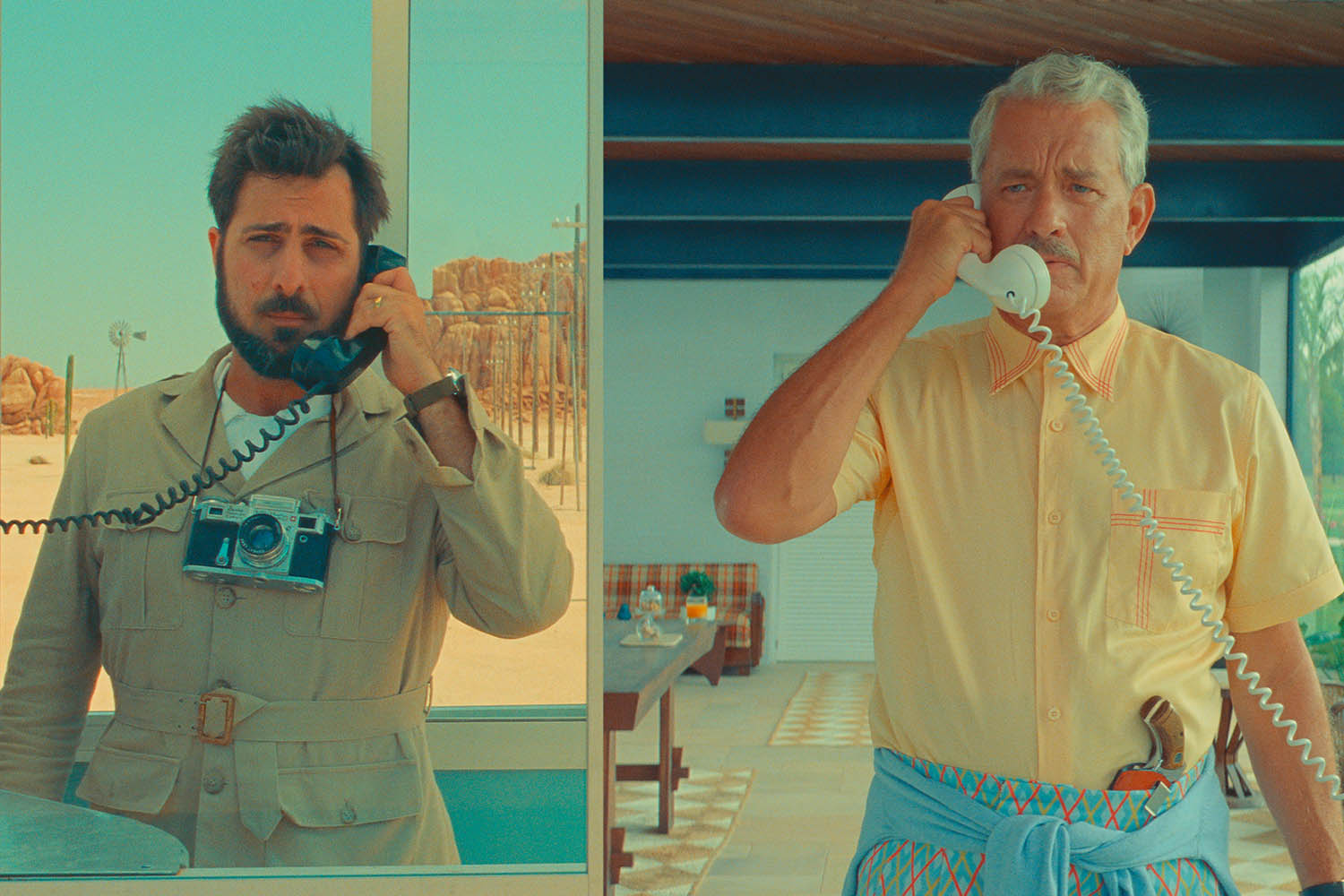
Asteroid City is a bold movie made by a confident director who trusts his audience and knows his medium. A little like Grand Hotel Budapest, Wes Anderson’s latest offering is a play within a teleplay within a movie, set in a town where an asteroid once landed that now hosts a science fair where kids assemble, offering death rays as high school experiments. Jason Schwartzman’s Augie Steenbeck – a war photographer dealing with the death of his wife and trying to connect with his son Woodrow – breaks the fourth wall for directorial advice.
Aliens arrive, but somehow add to the wistful mood of beautiful, delicately conjured whimsy. Scarlett Johansson, Tom Hanks, Hope Davis, Jeffery Wright, Hong Chau, Tilda Swinton, Liev Schreiber, Matt Dillon, Steve Carell and Margot Robbie mourn lost pasts, lost people, and consider hazy vistas of the future. Even the atomic explosions are adorable. As one reviewer put it, “Wes is making his film again.”
And Anderson’s film is growing and growing, like one of his celluloid science experiments, to envelop us all. His style is so recognisable that TikTok and YouTube have recently exploded with AI MidJourney versions of whimsical trailers in the Wes Anderson style for Pulp Fiction, Star Wars, Breaking Bad, Lord of the Rings and The Matrix. Instagram is full of artfully Anderson-ised photographs of real world minibreaks. A wet weekend in Warrington has never looked so good.
So what? The total take worldwide for Anderson’s entire output – that’s the international ticket sales for every single one of his films added together – is slightly less than The Super Mario Bros Movie US box office. Wes Anderson £543,570,015. Mario $570,554,370.
And yet: his long-term distributor Searchlight lost the bidding war to release Asteroid City to Focus Features and issued this nigh-on-tearful statement of regret: “We love Wes and are sad not to be part of this one. We look forward to seeing it. We love working with him.”
His career makes no sense: Anderson recreates the 1960s modernism of Michelangelo Antonioni, Jean-Luc Godard and Robert Bresson, who deliberately created characters that are extremely difficult to identify with. Anderson uses those techniques to endlessly revisit the patterns and effects of his parents’ divorce.
His audience makes no sense: In 2016, when Anderson directed a commercial for H&M, a YouGov analysis found that his fans are aged 18-34, live in cities, vote Democrat, and are perfectly split male/female. That’s younger than the average movie go-ers and far younger than Anderson’s peers – like Quentin Tarantino – who over-index on men aged 66+.
He does have a patron. Steven Rales, co-founder and board director of global manufacturing giant Danaher Corporation (which, according to Forbes, “focused on tax avoidance and cash flow” to build “a diversified firm”) used his personal wealth of $7.5 billion to launch film production company Indian Paintbrush in 2006 and has bankrolled every Anderson movie since.
He will become the screen’s Roald Dahl. Netflix bought the Dahl estate in 2021. Having made Fantastic Mr Fox, Anderson’s The Wonderful Story of Henry Sugar, starring Benedict Cumberbatch, is due out in the autumn. It is shot, as Anderson usually does, on 16mm film.
Photograph courtesy Pop. 87 Productions/Focus Features