Sensemaker Daily

- 3,000 Palestinians fled a Jenin refugee camp as the Israeli military continued a major raid in the West Bank.
- Victoria Amelina, a Ukrainian writer, died from her injuries after a Russian missile hit the eastern city of Kramatorsk.
- Meta said it would launch Threads, its rival to Twitter, on Thursday.
Propelled by faith and hope but definitely not charity, Apple’s market value passed $3 trillion last Friday. It moved into 13-digit territory never occupied by any other listed company, and stayed there.
In the past day and a half of trading, investors have added nearly $30 billion to its market cap.
So what? The bigness of Apple makes you wonder (to adapt Paul Theroux).
Apple is now
- twice as big as Google;
- seven times as big as Exxon-Mobil; and
- bigger than Exxon, JP Morgan-Chase, Walmart, Coca-Cola, Netflix, Nike and McDonald’s combined.
In the past two decades Apple’s revenues have risen 70-fold and its share price 600-fold. It’s so big that its first angel investor, Mike Markkula, would be the world’s first trillionaire if he’d hung onto all his initial $250,000 stake.
Round numbers are arbitrary except as landmarks, but markets respond to them and they beg to be explained. Apple’s $3.027 trillion valuation is a function of its history and its future:
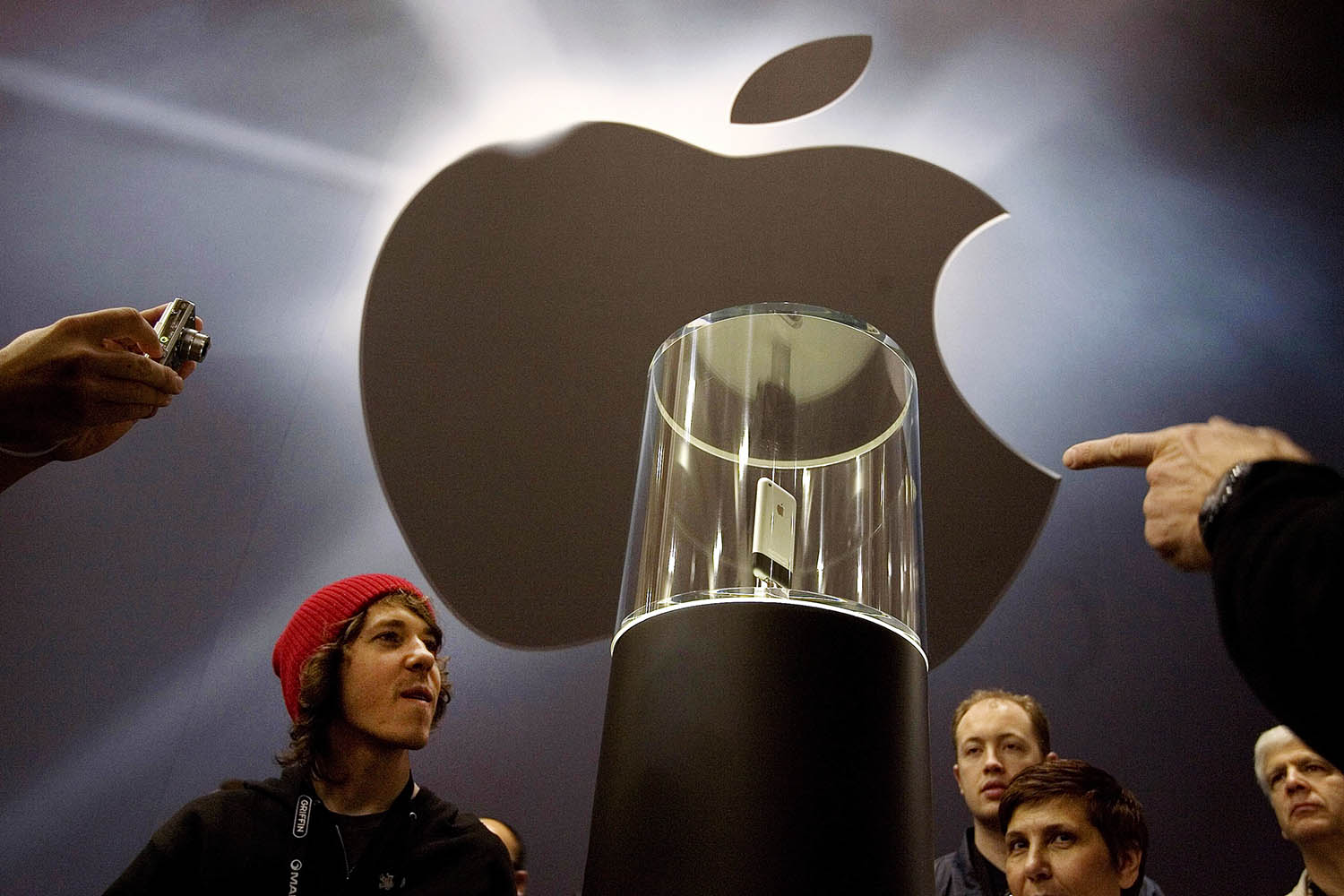
Then. It took two years and three floppy drives for Steve Jobs and Steve Wozniak to revolutionise home computing with the Apple II desktop. In two more years their annual sales rose 15-fold to $117 million. Apple nearly went bust without Jobs (1985-97) but roared back with his return and, crucially, with the iPhone – “a singular product that continues to transform life and commerce around the world” (Aaron Tilley, WSJ).
- iMagic. Apple sales grew nearly 10-fold to $230 billion in the decade following the iPhone’s 2007 introduction. The device spawned an industry of copycats but also a closed Apple economy – an “ecosystem” to its admirers – binding more than a billion customers and subscribers into willing dependency on Apple hardware and services.
Other historic factors behind the $3 trillion number include
- China, where CEO Tim Cook fine-tuned contract manufacturing by Foxconn to take advantage of the China-US wage gap at a network of 150 factories;
- Clairvoyance and design – Apple created mass markets for MP3 players (iPods), tablets (iPads) and wearables (the Apple Watch) as well as smartphones by making products customers didn’t know they wanted at margins they didn’t know they could afford; and
- Judge Yvonne Gonzalez Rogers, who ruled in favour of Apple on nine out of ten counts in a potentially disastrous 2020 lawsuit filed against it by Epic Games, alleging anti-competitive practice in the Apple App store.
Now. iPhones still account for more than half the company’s revenues. China still makes 90 per cent of them but Cook’s gradual move into India and Indonesia to diversify his manufacturing base has satisfied investors he has a viable plan B should the risks of doing business with China come to outweigh the rewards.
So when the Fed paused interest rate rises earlier this month, Apple was a natural first choice for asset managers
a) moving back into equities from bonds;
b) moving out of fossil fuels; and
c) dumping Meta but looking to stay heavily invested in tech.
Warren Buffett’s Berkshire Hathaway, late to the tech party, bought 20 million extra Apple shares in the first quarter of this year, and sold $6 billion-worth of Chevron. Apple now accounts for 46 per cent of Berkshire Hathaway’s entire portfolio.
Next. When Nvidia reached a $1 trillion valuation earlier this year it was seen as a bet on AI’s future. Apple’s $3 trillion valuation is a bet on Apple’s future. The company is an AI laggard and failed to set markets alight with last month’s launch of its Vision Pro augmented reality headset. None of which prevented a 39 per cent run-up in its share price this year before the launch. Nor have worries about the headset caused a sell-off since.
Investors who’ve built careers backing Apple’s products know it can afford to lose all the $60 billion it’s spent on AR and still grow selling iPhones on six continents.
Who are they? Institutional investors hold 61 per cent of Apple stock, chief among them the Vanguard Group, Berkshire Hathaway and BlackRock. The biggest individual stockholders are Cook, Arthur Levinson (Apple’s chairman) and former US Vice President Al Gore, whose 460,000 shares are currently worth $87 million.