- The US granted full approval to Lecanemab, a drug that slows the progression of Alzheimer’s.
- Twitter threatened to sue Meta, accusing the firm of stealing “trade secrets” when creating Threads, its rival messaging app.
- Amazon deforestation fell by a third in the first six months of this year, according to Brazil’s government.
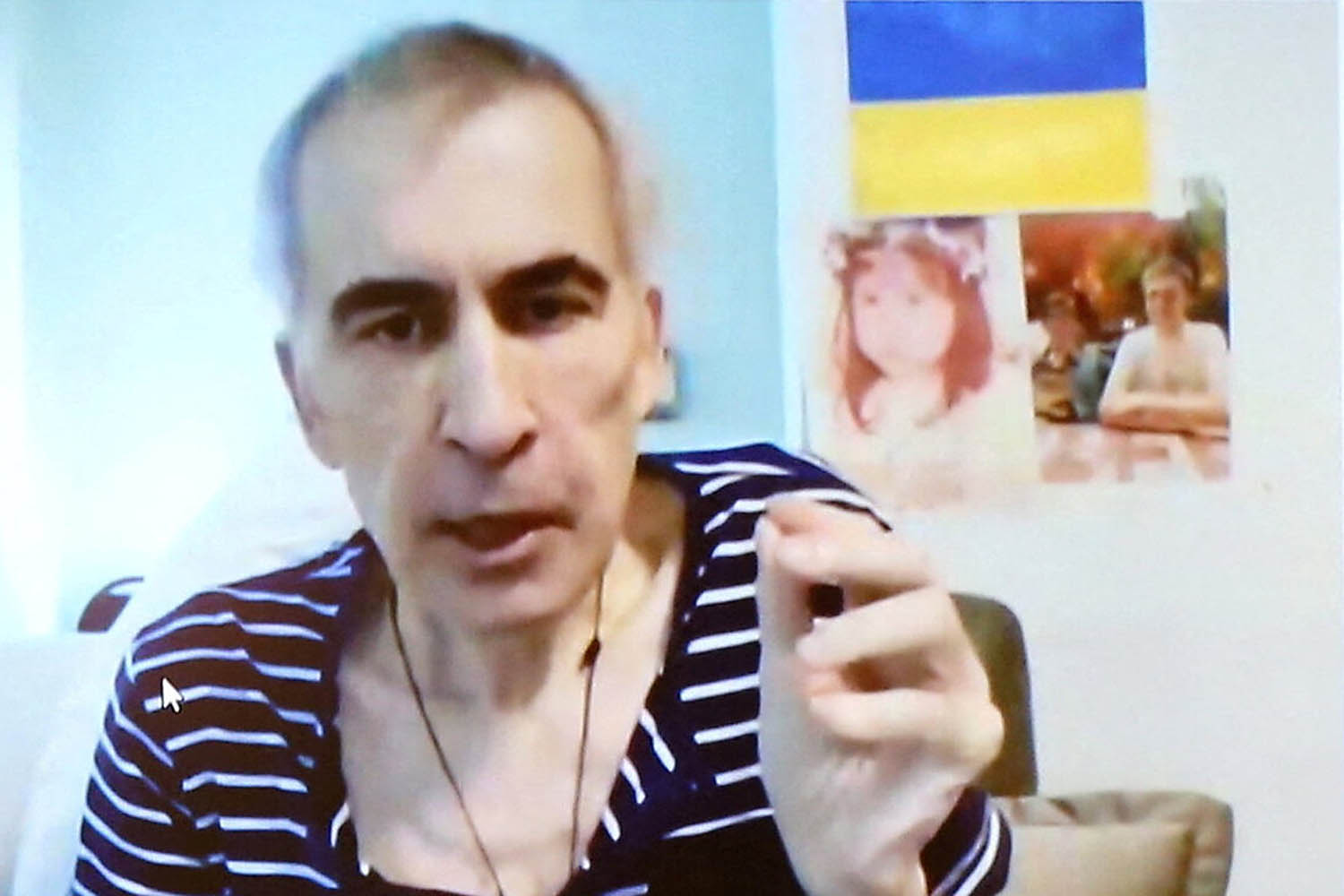
Last month an emaciated Mikheil Saakashvili, ex-president of Georgia, appeared by videolink in a Tbilisi court to say he was being held in hospital against his will. When he appeared again this week he looked close to death. Ukraine – where Saakashvili is also a citizen – demanded his release. That demand was later hand-delivered to Tbilisi where it will probably be rejected.
So what? As war rages in Ukraine, Russia is pursuing Georgia by other means. It already controls a fifth of Georgia’s territory, as of Ukraine’s. It has tanks stationed hours from the capital, and while the vast majority of Georgians want to join the EU, the ruling party is dragging the country in the opposite direction.
Saakashvili has become a symbol of Georgia’s frustrated European yearnings. Arrested in 2021, he has lost more than half his body weight in detention, partly from a hunger strike last year and partly, he says, from mistreatment. Ukraine’s President Zelensky says Georgia’s pro-Russian authorities are slowly killing him.
It wasn’t meant to be like this.
European dream. In 2016 Georgia signed an association agreement with the EU, leading to a Georgia-EU free trade area, visa waivers for short stays in the Schengen area and more than €100 million a year in financial support.
- The EU overtook Russia as Georgia’s top trading partner.
- Georgia’s laws were on track to align gradually with Europe’s.
Then, with the help of Bidzina Ivanishvili, a pliant Georgian oligarch, Putin intervened.
“Georgian dream”. Ivanishvili’s political party came to power in 2020 after elections the opposition said were falsified. The following year it unilaterally withdrew from the EU agreement, prompting Brussels to voice “grave concerns” about the direction of its reforms.
Georgian reality. In 2022 Georgia applied for EU candidacy but the European Council decided only to recognise Georgia’s “European perspective”, while Ukraine and the Republic of Moldova were granted candidate status. The EU’s concerns related to high-level corruption, police violence, a non-transparent judiciary, LGBTQ+ discrimination, multiple instances of malpractice during parliamentary, presidential and local elections, and media freedom restrictions.
The ask. To get EU candidacy, Georgia has to fulfil 12 recommendations answering Brussels’ concerns. The European Commission recently said Georgia had fully met three of the requirements, partially met seven, had made “limited progress” on one and on the twelfth – media pluralism – had made “no progress at all”.
In the meantime Georgia has restored direct flights to Moscow and implemented a law against “foreign agents” that is a facsimile of one introduced earlier in Russia. None of which improved its chances of becoming an EU candidate state, says Natia Seskuria of the Royal United Services Institute.
Russia’s dream is simple: to get Georgia back to Russia’s political orbit. And the pro-Russian agenda of Georgian Dream as a ruling party is clear. It includes
- jailing Saakashvili;
- lifting sanctions against Russia and helping Russia to get sanctioned goods;
- enforcing the foreign agents law (although it was withdrawn after massive protests in which police used water cannons and tear gas in central Tbilisi);
- visa-free Russian travel for Georgians; and
- endorsing the Russian narrative that the war in Ukraine started because of Ukraine’s wish to join Nato (even though the Georgian parliament voted unanimously for Georgia to join Nato in 2006, and 77 per cent of Georgians agreed in a referendum in 2008).
A pro-Russian government and a pro-EU population make an explosive mixture. Add to that hundreds of thousands of Russians who have moved to Georgia to avoid mobilisation, handing Russia a reason to say it must protect its citizens.
Saakashvili’s death would ratchet up tensions between the West and Georgia even further – which is why Russia would welcome it.