Sensemaker Daily

Xi Jinping doesn’t realise China’s economic miracle depended on capitalism. Or he doesn’t care. Either way, by most accounts the world’s second-biggest economy is in big trouble.
- Ukrainian troops raised their flag in Robotyne on the southern front (more below).
- A 20 year-old man became the first Ugandan charged with “aggravated homosexuality” under a law which makes it punishable by death.
- An 8cm worm was found alive in the brain of an Australian woman.
Three data points to note as the northern hemisphere gradually gets back to work:
- Chinese household bank deposits are up 70 per cent since the start of Covid.
- Goldman Sachs’ luxury goods index has slid 9 per cent in the past six weeks.
- The Australian dollar has depreciated by 3 per cent against the US dollar in the past quarter.
So what? These are all causes or effects of a misfiring Chinese economic recovery that was expected to be pulling the world out of its post-Covid funk by now but isn’t.
Point 1) means Chinese consumers are hoarding rather than spending or investing. Point 2) is evidence of point 1) since luxury goods sales depend above all on China’s brand-conscious middle class, which is pulling in its horns. Point 3): China is Australia’s biggest trading partner and supplier of the iron ore used to make steel girders for its $3 trillion residential property sector, making the AUD-USD exchange rate a good proxy for the outlook for the Chinese economy.
Ghost suburbs. By most indicators, that outlook isn’t good. Property in particular has turned into a drag after delivering up to 20 per cent of annual GDP growth for most of the past two decades.
- Evergrande, once the country’s second-biggest developer, resumed share trading yesterday in Hong Kong after a 17-month hiatus while it tried to dig itself out of bankruptcy. A condition of relisting was full financial disclosure, so the company had to report $300 billion in debts and a $4.5 billion loss in the first half of this year. Its share price slumped by 80 per cent in a few hours.
- Dozens more developers and the shadow banks that finance them have defaulted on debts or asked to delay payments on corporate bonds. This is partly because of economic mismanagement – local governments dependent on land sales for revenue encouraged a 140-million apartment bubble that is now deflating. But it’s also because of demographics.
Big shrinking country. China’s population and workforce are in decline. The great urbanisation that helped lift 500 million people out of poverty has plateaued. Youth unemployment is at 21 per cent and rising. Analysts hopeful for a brisk Chinese bounceback in Q1 this year after Xi Jinping’s abrupt scrapping of zero Covid last December saw a new reality in Q2, and not just in slumping domestic consumer confidence.
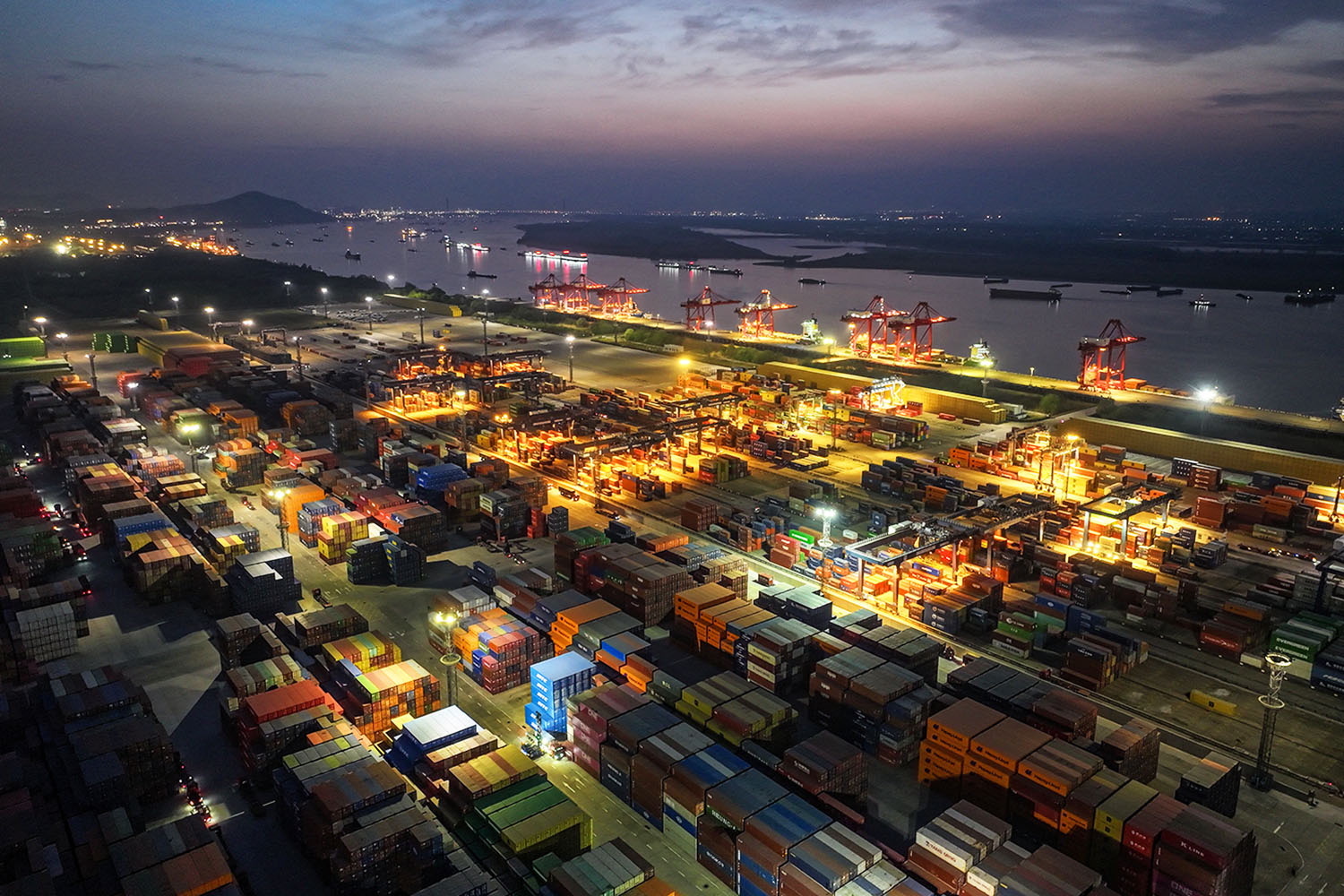
- Trade with the US has fallen by a fifth compared with this time last year.
- Foreign direct investment is down by 87 per cent.
- Goldman Sachs reported $26 billion in net foreign exchange outflows last month alone.
- A new survey of currency traders published today forecast a 7.6 per cent slide of the offshore Yuan against the dollar this year, which would take the Yuan to a record low.
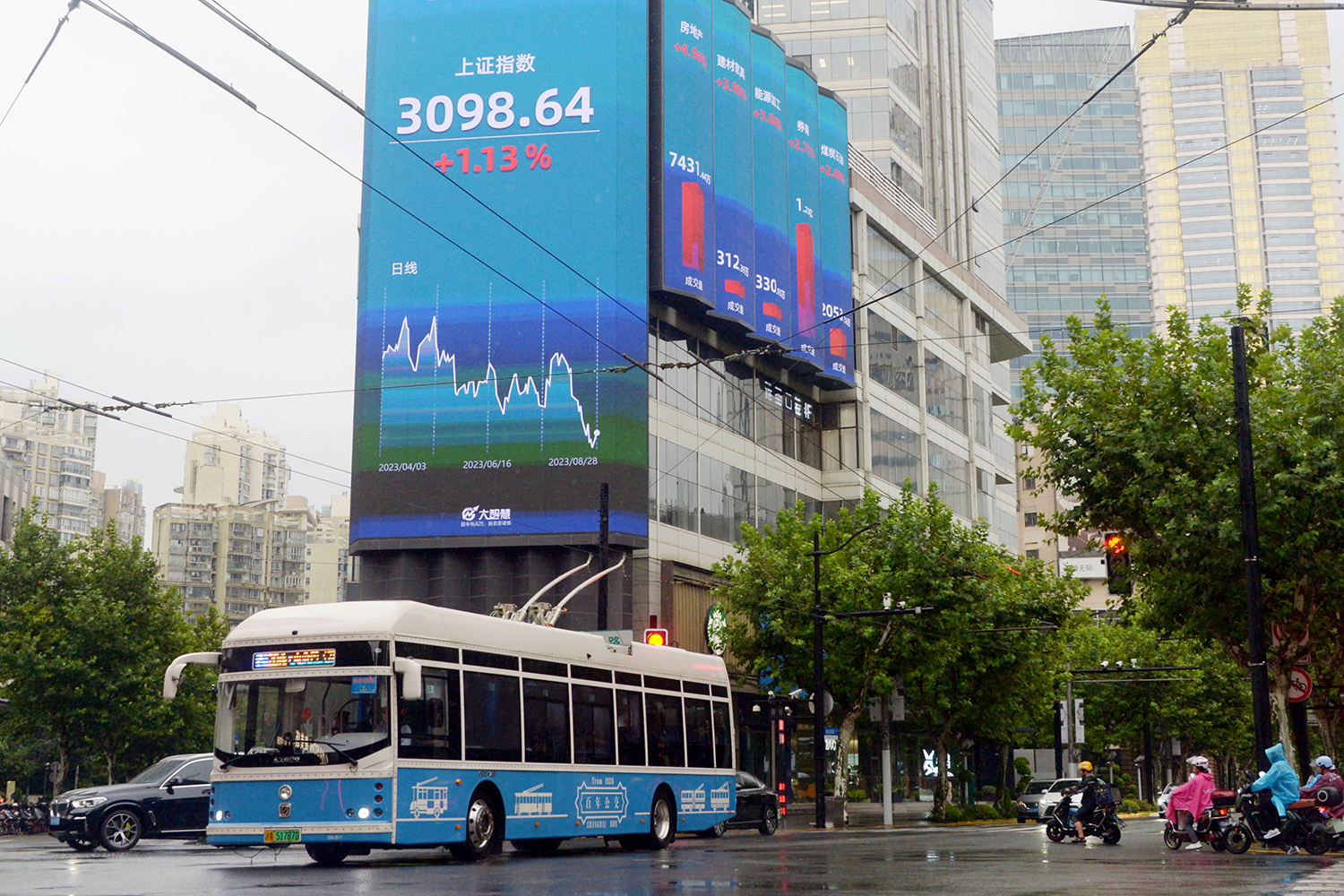
Emergency medicine. The Bank of China has tried cutting interest rates and stamp duty on share transactions, so far to no avail. The stamp duty device worked in the 2008 crash but not yesterday. A senior trader at a Hong Kong brokerage told the FT: “I would love to say this time was different, but the market is still incredibly pessimistic.”
Another view. China bulls like Louis-Vincent Gave of Gavekal, an advisory firm, point to buoyant Chinese bank stocks, resurgent mainland Chinese visitor numbers in Macau and a modest year-on-year uptick in private sector manufacturing investment as signs of renewed life in the world’s second-largest economy.
Who’s right? It’s getting harder to tell. China stopped publishing data on youth unemployment when it became embarrassing, and private-sector financial data providers like Wind Information have started self-censoring for foreign clients.
Who’s in charge? Xi Jinping, and that’s a problem. The most authoritarian Chinese leader since Mao inherited an economic miracle based on harnessing free markets that he neither trusts nor understands.
So who’s his finance minister? A party functionary virtually unknown outside China called Liu Kun. Further information gratefully received.
Photograph: Getty Images