Sensemaker Daily
Putin’s strategy of dividing Europe seems to be working, as some of Ukraine’s neighbours take a harder line on supplying weapons to Kyiv
- Top US and China officials held “substantive” talks in Malta ahead of a possible Xi-Biden summit.
- Japan’s government said more than 10 per cent of its population is now aged 80 or over.
- The US military asked for help finding an F-35 fighter jet after the pilot ejected in a “mishap” over South Carolina.
Last Friday, Slovakia, Poland and Hungary imposed unilateral bans on agricultural imports from Ukraine. Hungary admits it opposes Ukrainian membership of Nato and the EU, and Slovakia’s Smer-SD party, frontrunner in elections due on 30 September, objects to supplying Ukraine with weapons.
So what? These faultlines may affect Ukraine’s counteroffensive and even the outcome of the war.
Hard soft power. Russia has no equal in terms of the sheer scale of its covert operations. Their impact on Europe is growing and consists of
- economic influence;
- energy investments;
- local political alliances;
- the Russian Orthodox Church; and
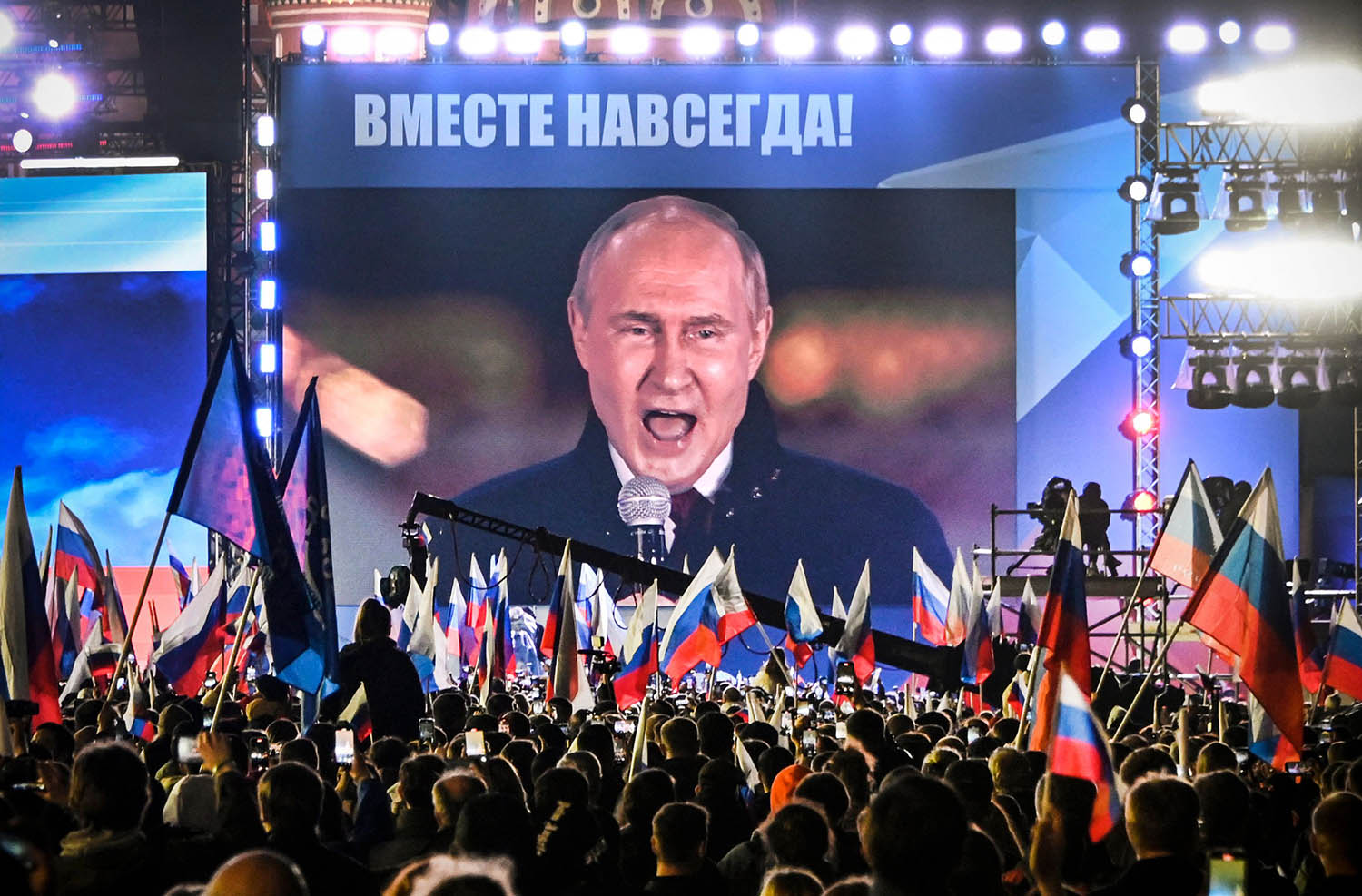
- Kremlin propaganda, including via mirror websites and YouTube channels for Sputnik and RT, enabling them to continue broadcasting freely even though they’re banned in the EU.
These factors mean negative attitudes to the UK, the US, the EU and Nato are growing in the EU, albeit from a low base, while sanctions against Russia and weapons supplies to Ukraine meet objections from some EU states.
By the numbers:
- Up to 70 per cent of Hungarians, Romanians, Bulgarians and Slovaks think providing Ukraine with weapons “provokes Russia” and drags their own countries closer to the war (a similar percentage in these countries thinks helping Ukrainian refugees comes at a cost to their own citizens).
- 50 per cent of Slovaks consider the US a security threat to their country (as do 33 per cent of Bulgarians and 25 of Hungarians).
- 32 per cent of Bulgarians have a positive perception of Vladimir Putin, as do 36 per cent of Xi Jinping. Hungary, Slovakia and Romania are also in this club. So to a lesser extent is Latvia, thanks to the significant Russian minority that stayed after the Soviet collapse.
- More than 20 per cent of Romanians, Czechs, Bulgarians and Slovaks would like their countries to leave the EU.
Look right. Ultranationalist sentiment in Europe is growing. Right-wing or far-right parties are
- significant players in Switzerland and North Macedonia;
- ruling in Italy, Hungary and Poland;
- members of governing coalitions in Finland and Latvia; and
- supporting governing coalitions in Sweden and Serbia.
All this loosens EU political unity.
Look West. After February 2022, far-right parties in Italy and France distanced themselves from Russia, condemning its war in Ukraine. But the far-right Alternative for Germany party, supported by 21 per cent of Germans, remains the most pro-Russian in Europe. And Russia has allies not just on the far-right but in all parties, says Anton Shekhovtsov, director of the Centre for Democratic Integrity. Case in point: Germany’s “centrist” former chancellor Gerhardt Shroeder, whose pro-Russian influence Shekhovtsov says can’t be overstated.
Look out. Ruled by an ex-FSB officer, Russia attaches huge importance to espionage, as evidenced partly by its high spy attrition rate. Its recent track record includes
- hundreds of Russian spies expelled from 29 countries, including Poland (45 expelled), France (41), Germany (40), Slovakia (35), Slovenia (33) and Italy (30);
- dozens of Russian spies arrested since the war started in the UK, Germany, Poland, Slovenia, Albania and Norway;
- spyware installed on the iPhone of Galina Timchenko, owner of the exiled Russian language Meduza news outlet, while she was in Germany meeting Russian journalists.
Look up. In addition to pumping up pro-Russian and anti-EU moods in Europe, Russia is managing to find ways around sanctions and making even more weapons. Smuggling in the microelectronics and other sanctioned Western materials needed for cruise missiles, Russia is now producing 200 tanks and two million artillery shells a year (twice as many as before the war). Russia’s ammunition production exceeds the West’s by a factor of seven and is 10 times cheaper: a 152-millimetre artillery shell costs $600 in Russia while a 155-millimetre round costs $5,000-$6,000 in Western markets.
Look further. Russia’s main strategic goal is the destruction of the EU, Shekhovtsov says. Its tactic is to undermine EU support for Ukraine and to stop arms deliveries, and the data from Eastern Europe suggests Kremlin propaganda is still effective there.
But ultimately the future of Europe will be determined on the battlefield in Ukraine – where it’s hard to win without weapons.