
It’s a truism to say Britain is obsessed with class, but it’s not just a cliche. Last week’s British Social Attitudes survey found that 77% of us think class strongly affects their opportunities – up from 70% in 1983. Labour’s Keir Starmer has talked about the class ceiling and has pledged speaking lessons for students.
Perhaps that’s why George Bernard Shaw’s Pygmalion, now playing at the Old Vic, still resonates – at least to a degree.
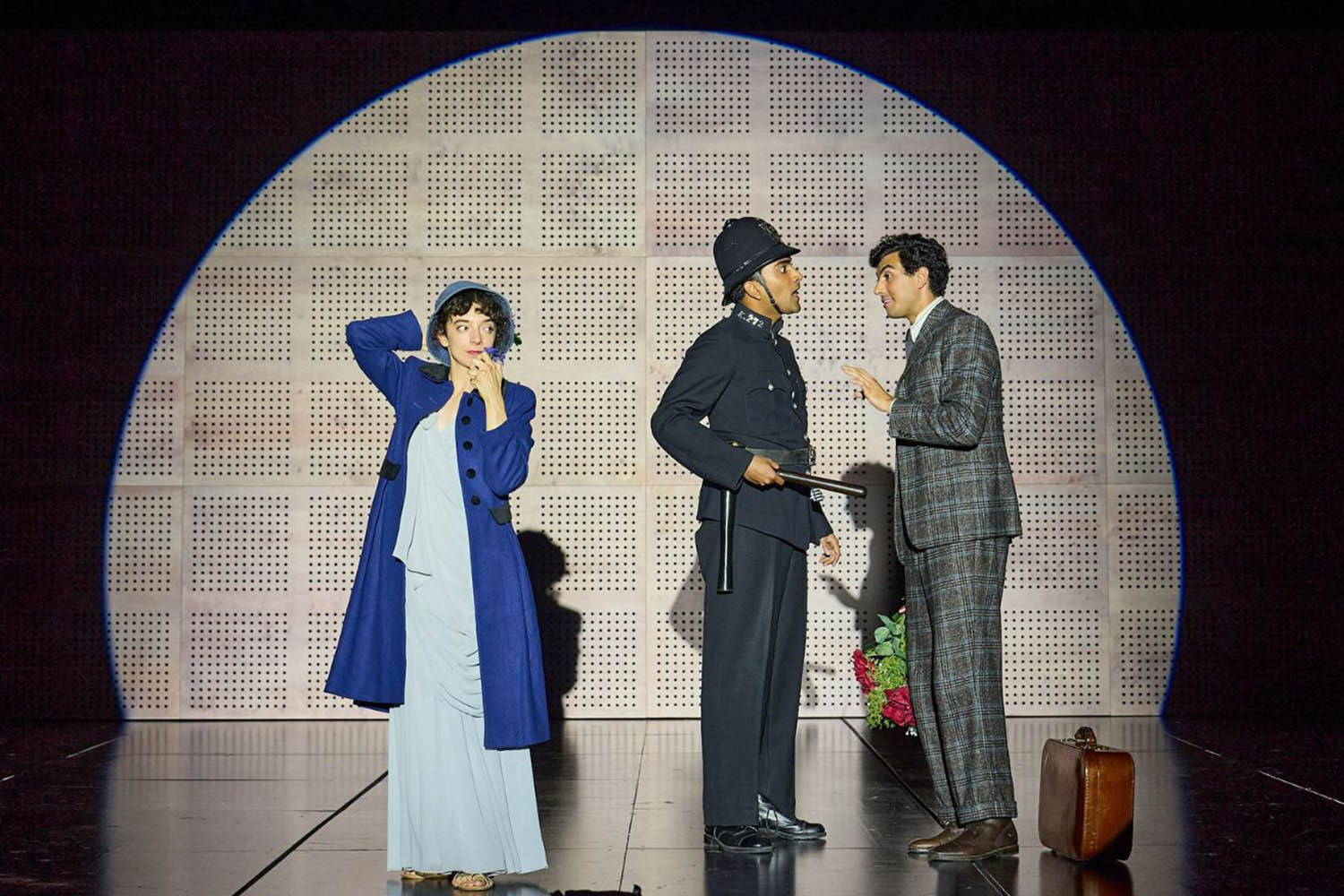
Patsy Ferran stars as the “cabbage leaf” cockney flower-seller Eliza Doolittle opposite Bertie Carvel as Henry Higgins, the fixated professor of phonetics who makes a bet to pass her off as a duchess within six months.
Their first attempt to position her as well-to-do crashes against reality when Eliza strays off topic – a warning to politicians that class is about more than speaking lessons.
The story is as well-trodden as many classics, encouraging director Richard Jones to attempt something new: modern clothing for Eliza, for example, perhaps as a nod to the class constraints she would face in the 21st century, as she did back then.
But any depth or nuance – in Eliza and Higgins’ relationship, or her position once she is turned into a poised lady, even some of the jokes – is lost in the breakneck speed at which they hurtle through the key moments. Posh people do talk fast, I guess. Even fake ones.
The denouement, in which Eliza chooses between the uptight Higgins and the moronic Freddie, is a reminder that for all his brilliance, Shaw was far too conventional to consider a woman truly going her own way. And that, thankfully, while some things do stay the same, others change (just a bit).
Photograph Getty Images