Sensemaker Daily

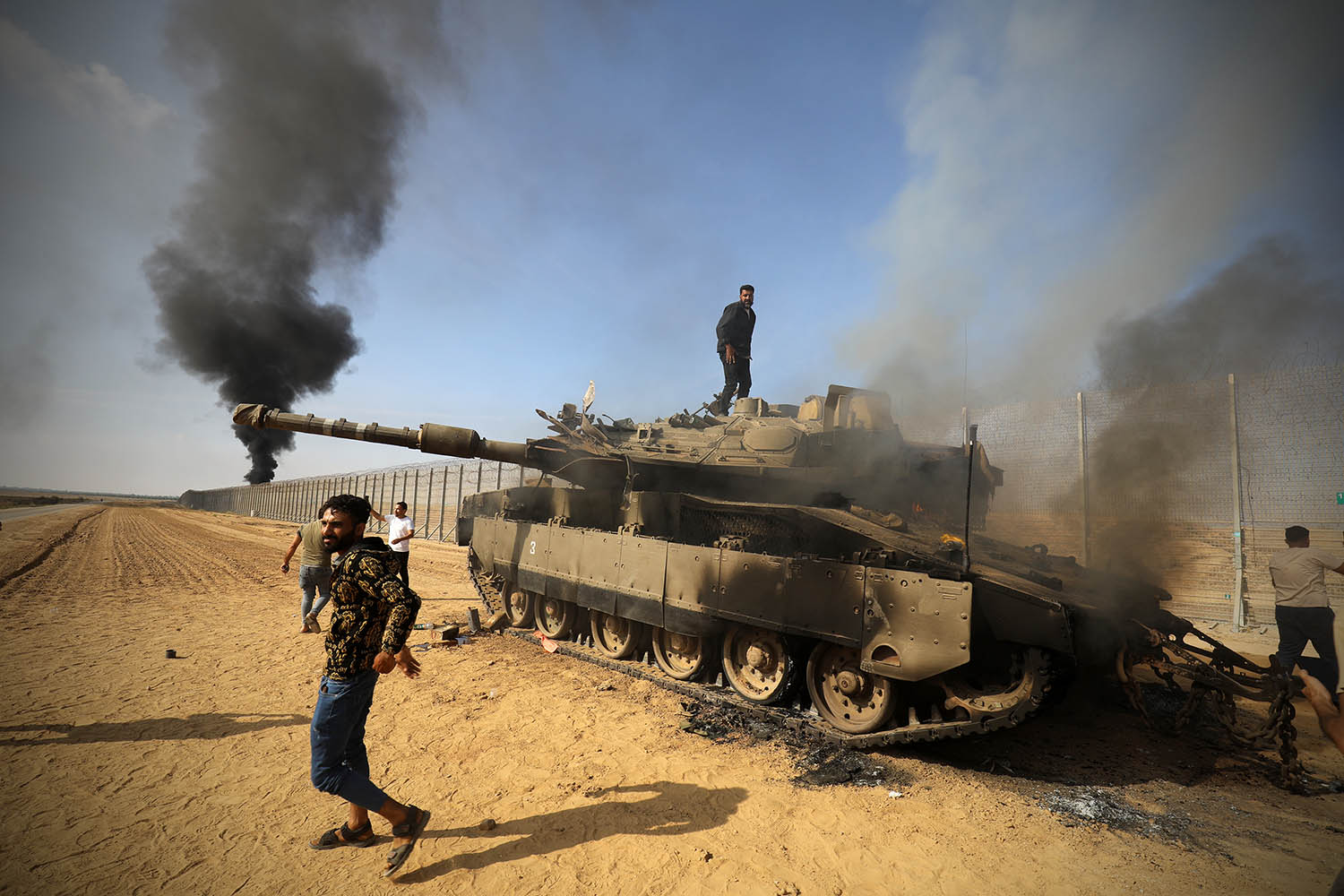
Hamas’s attack – the deadliest since the Yom Kippur War 50 years ago – took Israel by surprise and plunged it into a state of war.
Saturday’s devastating multi-pronged attack on Israel was planned in Lebanon over the summer and approved in Beirut by Iran last Monday, according to sources in Hamas, Hezbollah and Europe.
So what? New details are emerging almost hourly of Iran’s apparent involvement in the attack, which took Israel by surprise and plunged it into a full-scale war without precedent since the Yom Kippur War 50 years ago. By Monday morning
- more than 1,100 people were reported killed on both sides including 260 at one Israeli music festival;
- heavy armour was massing on Israel’s border with Gaza; and
- the future of US efforts to isolate Iran by normalising relations between Israel and Saudi Arabia looked in doubt.
The Beirut meeting, first reported by the WSJ, is the latest sign this conflict’s roots spread far beyond Israel and that its aftershocks will too. Other signs:
- a congratulatory call from Iran’s President Raisi to the Hamas leader Ismail Haniyeh on Saturday;
- a meeting between Haniyeh and Iran’s Supreme Leader, Ali Khamenei, in Doha in June;
- the redeployment of a US carrier strike group to the eastern Mediterranean, together with promises of US munitions for Israeli forces; and
- the deaths of at least two Israeli tourists shot yesterday in Alexandria, in Egypt.
Carnage. The dead are said to include more than 700 Israelis, and at least 400 Palestinians killed in retaliatory airstrikes on Gaza. Hundreds of revellers were massacred at the Supernova music festival by Hamas fighters filmed breaking out of Israel’s 16-year blockade of Gaza using motorbikes, pick-up trucks and paragliders.
Hamas claims to have taken 130 Israeli hostages; Palestinian Islamic Jihad another 30. From the available evidence, these are war crimes.
The Palestinian housing ministry said 413 people were killed in an initial wave of Israeli airstrikes that continued with attacks on 500 targets last night. Israel claims to have killed 400 Hamas fighters and destroyed eight Palestinian “war rooms”, a Hamas naval command centre and three tunnels in northern Gaza.
Meaning in numbers. More Palestinian casualties have been reported in the past two days than in any year since 2014, and more Israelis have been killed – by an order of magnitude – than in any single spike in violence in their country’s history. Hence parallels drawn with 9/11 by Israel’s military spokesman and its ambassador to the UN.
Why now? Hamas launched and led the attack but its timing is best explained by recent progress towards what would have been an historic accord between Israel and Saudi Arabia, intended to deepen Iran’s isolation. That prospect dismayed Hamas, which has run the Gaza strip since 2007 and fears Israel’s Arab neighbours are quietly abandoning the Palestinian cause. In addition Hamas knew
- the traditional solidarity between Israel’s armed forces and its government is under strain following a summer of protests against Netanyahu’s hard-right coalition; and
- Israel’s army has been distracted from Gaza border security by new duties protecting settlers on the West Bank.
What next? Israel said this morning that it had regained control of towns in its southern territory near Gaza, though a military spokesman said Hamas fighters could still be at large in the area.
Next, the reckoning:
- Expect short-term Israeli political unity in the face of an existential threat to give way to recriminations over the biggest intelligence and security failure in half a century – a failure based on the forlorn assumption that Hamas could be contained indefinitely in Gaza.
- Netanyahu will face pressure to launch a ground invasion of Gaza, even though Hezbollah has said it would respond with attacks from the north and any attacks on Gaza are now complicated by the presence of more than 100 Israeli hostages there.
- So far US officials have not endorsed reports of direct Iranian involvement in Saturday’s attack. Should that change, a scenario involving Israeli strikes on Iran and a wider Middle Eastern war – sucking western attention and munitions away from Ukraine – is all too plausible.
A thought. Palestinians “feel that they are being abandoned by Arab governments keen to take advantage of the high-tech Israeli economy,” Professor Lawrence Freedman writes. History may see this cataclysm, among other things, as a howl of protest from the Palestinian old guard at the gradual merger of the Middle East’s two skyscraper cultures – in the Gulf, and Tel Aviv.