Capital Economy, Business and Finance
Labour wants to shock-proof the economy in an uncertain world
Britain’s Labour Party is putting “economic security” at the heart of its election strategy in response to Covid, China and the high cost of living. Rachel Reeves even has her own name for it – “securonomics”.
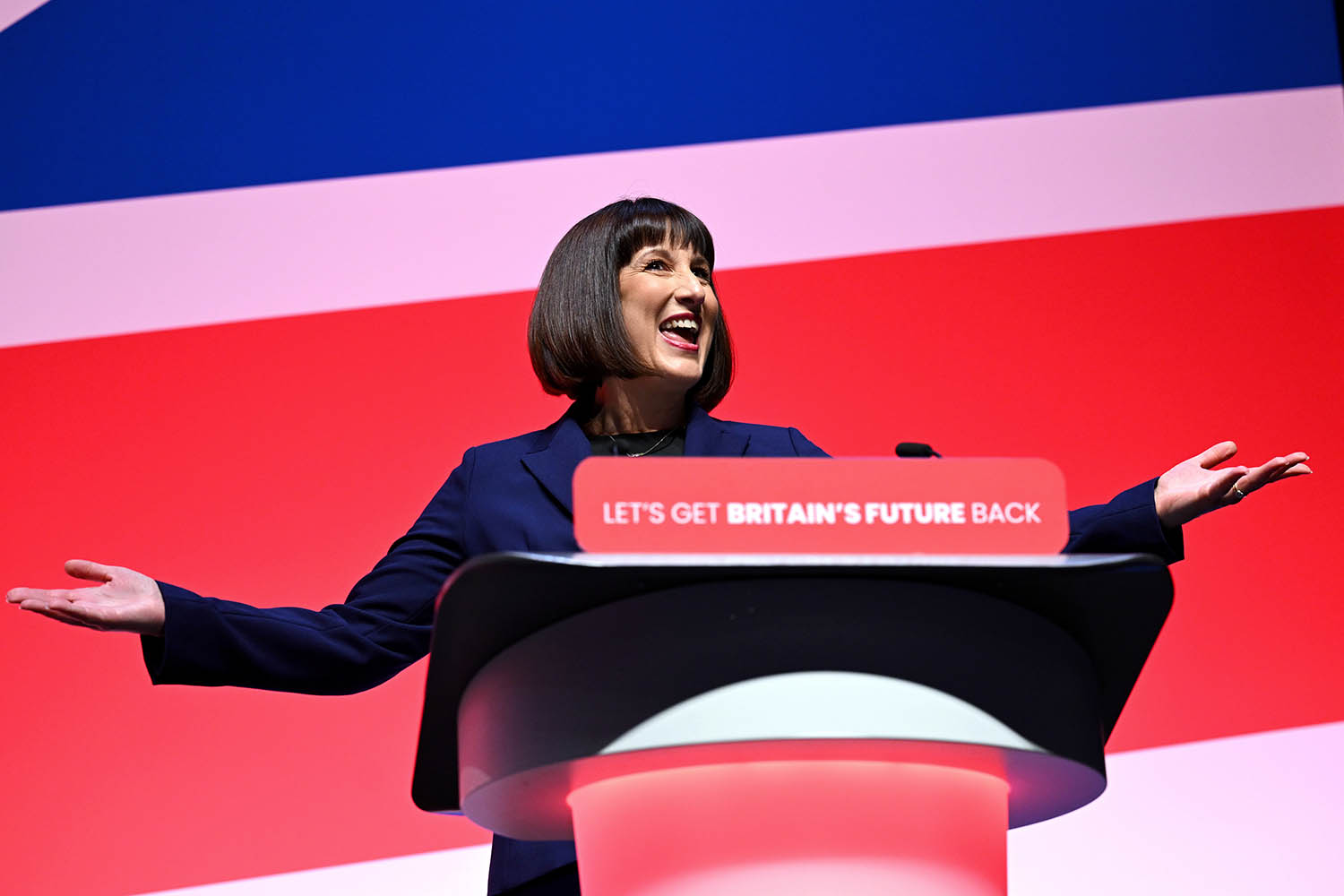
The shadow chancellor tried it out in a speech in Washington in May and fleshed it out in a conference speech yesterday designed to drive home the message that voters and business can trust Labour with their money.
Securonomics is Reeves’s twist on Bidenomics, without the safety net of a reserve currency and limitless room to borrow.
It’s more interventionist and less trickle-down than Britain’s battered status quo, with an emphasis on strong supply chains and more support for household finances.
The strategy is underpinned by public investments to be made through an initial £8 billion National Wealth Fund and a publicly-owned Great British Energy renewable generator, and incentives that Reeves claims will unlock private investment equivalent to another £50 billion a year.
Securonomics means rebuilding “our ability to do, make and sell here in Britain so we are less exposed to global shocks,” Reeves said.
There are two ways to view securonomics. One is as a legitimate response to 13 years of Conservative economic management that bore down on spending and weakened public services but still left the UK tax burden at a record high and nearly crashed the economy under Liz Truss.
Another is as a catch-all to appeal to weary businesses and homeowners without committing Labour to tax or spending commitments that the UK can’t afford and the Conservatives would seize on as proof of left-wing incontinence.
Tax. Reeves confirmed Labour would impose VAT on private school fees and a windfall tax on “energy giants” (without distinguishing between fossil fuels and renewables), and said she would aim to claw back £7.2 billion lost to Covid fraud and make tech firms pay the tax they owe. But far from warning of general tax rises, she parked her tanks on the Tories’ lawn and said she wanted lower taxes for working people. She has previously said she has no plans for a wealth tax or to cut tax breaks for the elderly.
Spend. In May, a £28 billion borrowing pledge to fund the green energy transition was “at the heart” of Reeves’ strategy. No longer. That has been postponed and there was no mention of the word “borrow” in the speech. Instead she offered a vignette of her mother counting receipts at the kitchen table and said: “Taxpayers’ money should be spent with the same care with which we spend our own money.”
Although the speech was light on policy, Reeves vowed to grow the economy “from the bottom up and the middle out”, and to “wage a war” on fraud, waste and inefficiency.
“The questions people should ask themselves ahead of the next election are simple: do you and your family feel better off than you did 13 years ago?” she said. “Do our hospitals, our schools and our police work better than 13 years ago? Frankly, is there anything in Britain that works better than when the Conservatives came into office 13 years ago?”
As part of Labour’s bid to persuade the public it can be trusted with the public purse strings, the speech was followed by a surprise video of former Bank of England governor Mark Carney, who praised her as a “serious economist” who “understands the big picture”.
Reeves, a former chess prodigy and Bank of England economist, confirmed Labour would introduce a fiscal lock on ministerial spending and speed up the planning process for major infrastructure.
Her biggest applause line was about a plan to create a Covid corruption commissioner to recover the billions lost to waste, fraud and flawed contracts during the pandemic.
Reinforcing her commitment to fiscal responsibility, she said a Labour government would introduce new rules ensuring ministers must consult the official watchdog on major tax and spending changes that would prevent a repeat of Liz Truss’s mini-budget, which caused turmoil in the financial markets.
She also pledged to slash government spending on consultants and ministerial jets. “What is Rishi Sunak so scared of up there in his private jet?” she asked. “Meeting a voter?”