Culture Society, Identity and Belonging

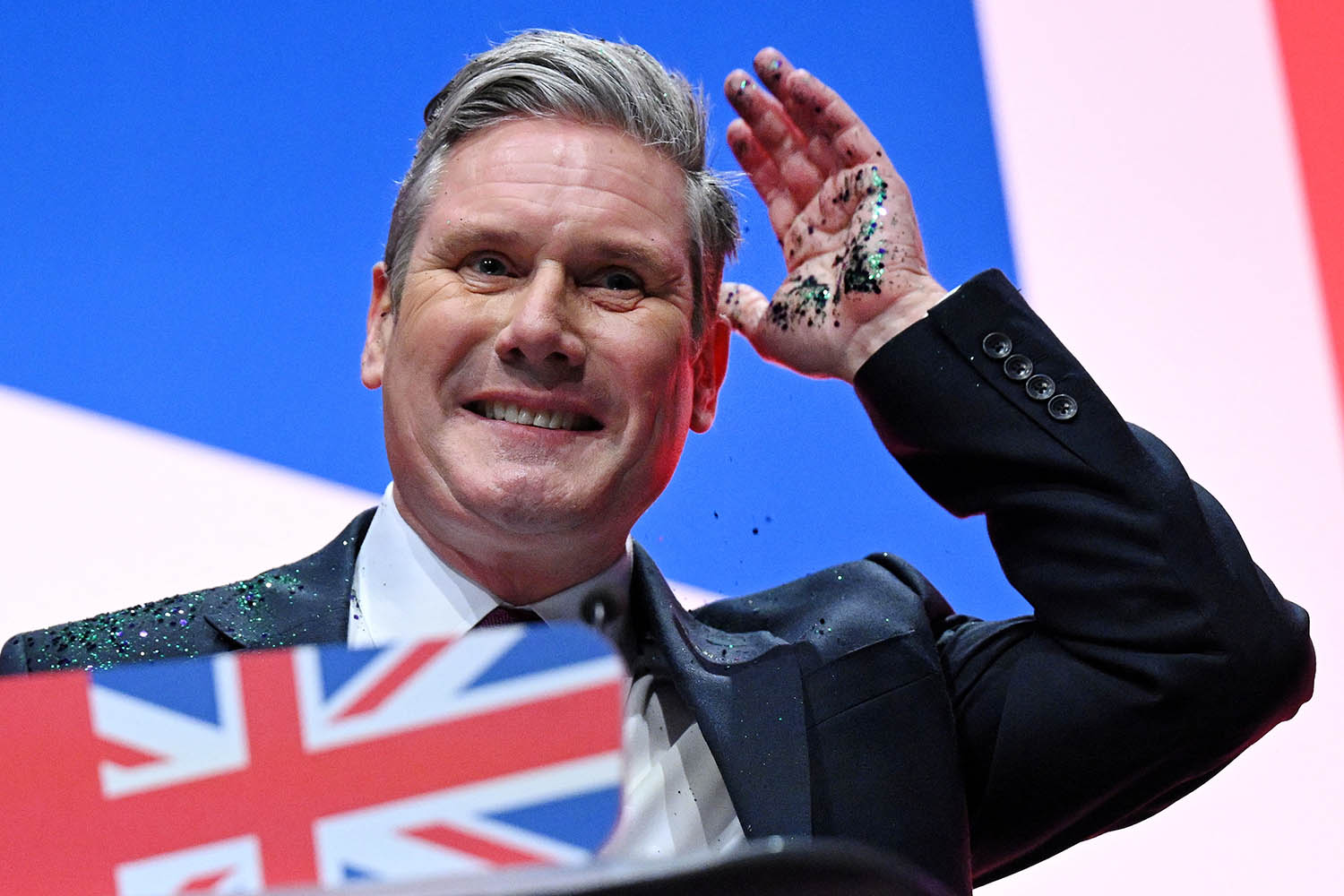
Sir Keir Starmer’s speech to the Labour Party Conference was light on anything resembling detailed policy, but big on vision and as part of Labour’s incursion into Middle England.
Labour needs to win over floating voters and convince those who would only vote Tory that this time it’s safe simply not to turn out. Hence Starmer’s mission, as one strategist puts it, to “derisk” the party.
The archetypal voter known as Stevenage woman is central to this strategy: she’s tuned out the political soap opera as she tries to keep her own show on the road, paying bills and feeding kids as prices stay stubbornly high.
Clues as to how Labour plans to woo her were all over Starmer’s speech, including a pledge to “never forget that politics should tread lightly on peoples’ lives”; a dividing line between himself and “people like Rishi Sunak… and the shallow men and women of Westminster”; and a claim that Labour is “no longer the party of protest [but] a party of service”.
Like his shadow chancellor on Monday, Starmer bet big on an industrial policy as an engine of growth. Like Rishi Sunak, he pitched himself as the change candidate. Unlike Sunak, he has a chance of being taken seriously.
The speech was forward-looking in its promise to “bulldoze” through planning restrictions to build 1.5 million houses and encourage business investment Starmer also invoked New Labour by:
- stressing that current challenges open up a “new path [that] can only be walked by a new party, a changed Labour party”;
- highlighting his Blairite predecessors’ policies on education, the NHS, and child poverty; and
- telling his party “things can only get better” – the theme of Tony Blair’s 1997 victory.
Outside the hall, Conservatives tweeted attack lines on his plan for VAT on private school fees (a “parents’ tax”) and accused him of blocking legislation that would allow new homes to be built.
Inside, Starmer was briefly troubled by a protester who covered him in glitter. That he was able to rush the stage and remain next to the leader of the opposition for several seconds has prompted urgent questions about his security.
But ultimately the most pressing question for Starmer and Sunak is whether this conference season – perhaps the last before the next general election – has changed the way the public sees them.
Initial polling after the Conservatives’ jamboree last week suggested the prime minister’s plan to scrap HS2, reform A-levels and introduce a phased ban on smoking has done little to help his party in the ratings.
But even with Labour polling consistently around 20 points higher, Starmer warned activists not to be complacent. “A party that has so completely severed its relationship with the future, that is prepared to scorch the earth just to get at us – they will be dangerous,” he said. “They will be up for the fight… and this isn’t over – in fact, it’s barely begun.”
Party strategists – on both sides – are conscious that the polling lead is soft: that people are switching from Conservative to “Don’t Know” rather than Labour. They point to the fact that this also happened during Blair’s first run at Number 10, but they also recognise that 2023 is not 1996.
Throughout the conference, the mood was that of a party ready for power. The question is whether that view is shared by the country.