
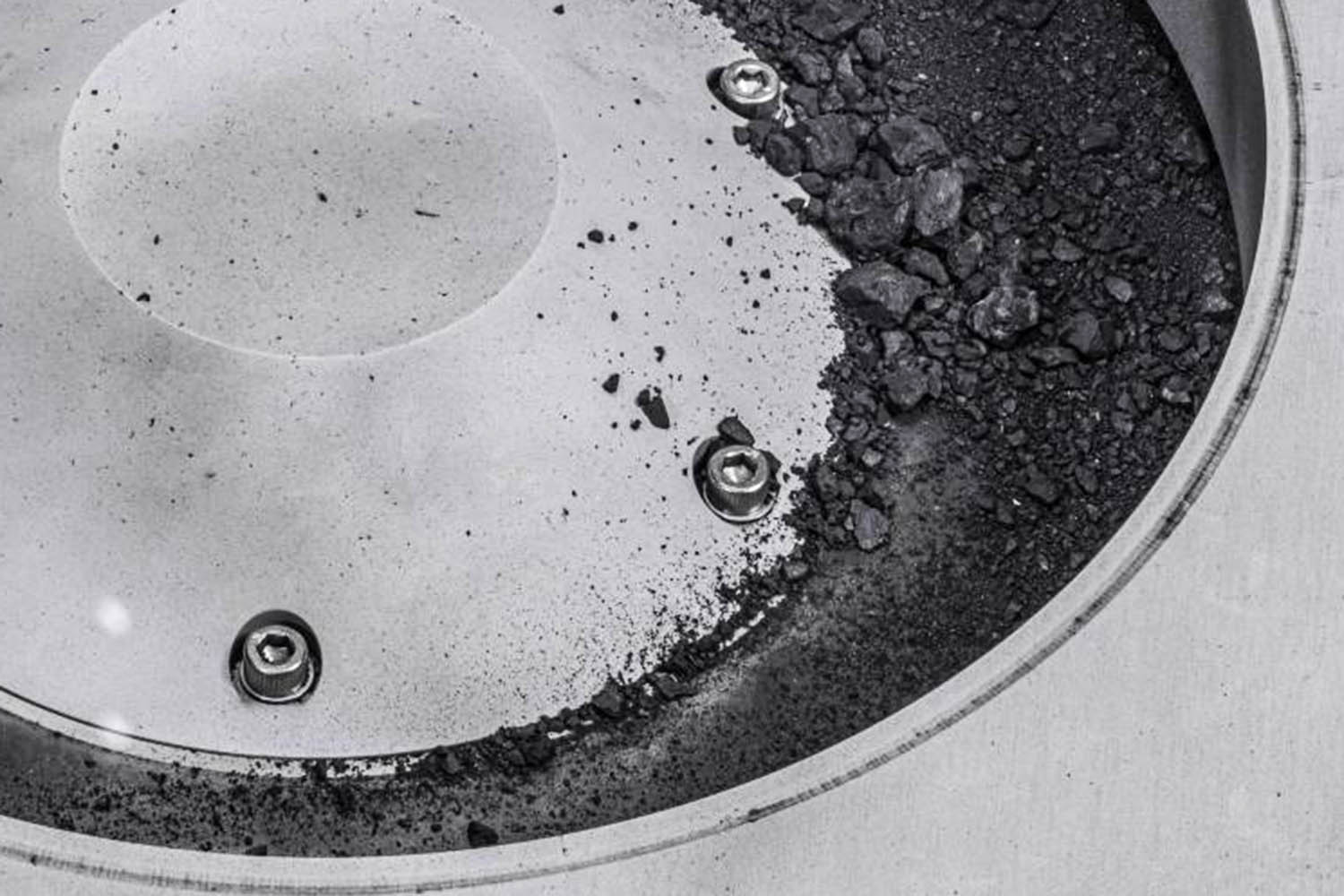
Tiny fragments collected from the asteroid Bennu contain water, carbon and clay-based minerals, strengthening the theory that life on Earth was seeded from outer space. Looking for all the world like charcoal dust, the 4.5 billion year-old sample was put on display in Houston by NASA two weeks after it landed in the Utah desert. In those two weeks scanning electron microscopes have found sulphide minerals which a lead investigator on the project called “a critical element for planetary evolution and biology”. He said the water and carbon in the sample are clues to how the world became liveable: “The reason that Earth is a habitable world, that we have oceans and lakes and rivers and rain, is because these clay minerals landed on Earth 4 billion years ago to 4 and a half billion years ago.” The Osiris-Rex probe, launched in 2016, picked up more rocks and dust than expected, and 70 per cent of it will be kept in pristine conditions for future generations of scientists with better diagnostic tools.