
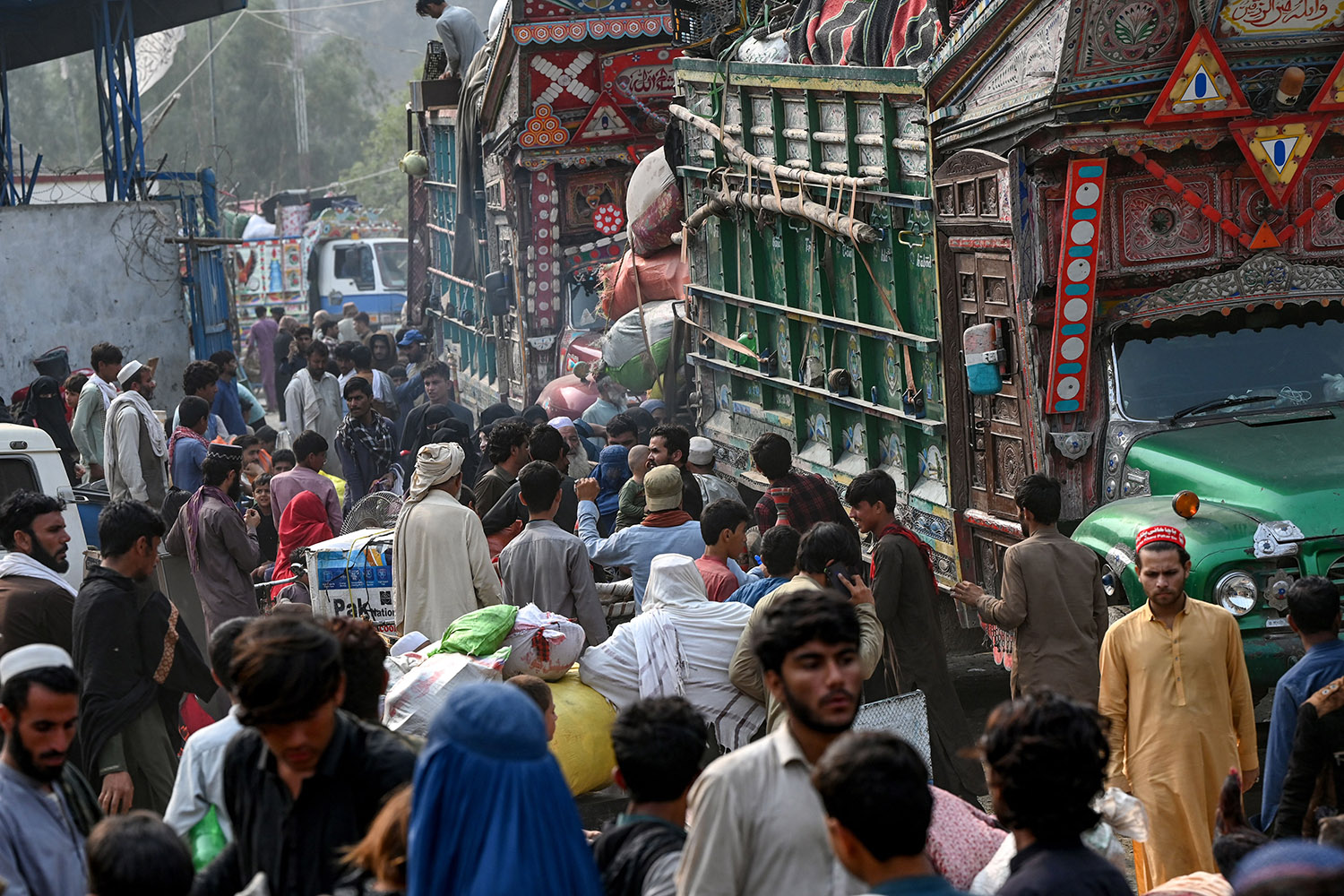
Today is the Pakistan government’s deadline for all undocumented migrants to leave the country. It’s a policy seen as targeting Pakistan’s neighbour – around 1.7 million Afghans are believed to be living in Pakistan illegally.
Some left Afghanistan after the Taliban takeover in 2021; others have lived across the border for decades. Najmuddin Torjan, 63, told the NYT he left Afghanistan during the Soviet invasion and later married and had children in Pakistan. Three generations of his family have now dismantled their home and joined thousands of people heading for the border.
The expulsions are linked to tensions between Pakistan and the Taliban over militant groups like the Tehreek-i Taliban Pakistan (TTP) – a terrorist group linked to the Taliban – that are carrying out attacks in Pakistan’s border regions.
Afghanistan is already struggling to cope with one of the world’s worst humanitarian crises. Around 15 million people, a third of the population, do not know where their next meal is coming from, Philippe Kropf, the head of communications for the World Food Programme (WFP), tells the BBC.
Last month the country was hit by a series of deadly earthquakes that mainly killed women and children, since most women are trapped in their homes due to the Taliban’s eradication of women’s rights.
But Pakistan has refused to move the deadline and has set up repatriation centres across the country to detain and repatriate Afghans. Human rights groups say landlords are already evicting Afghans, fearing fines if they don’t, while Pakistan employers are laying off Afghan workers.