Sensemaker Daily

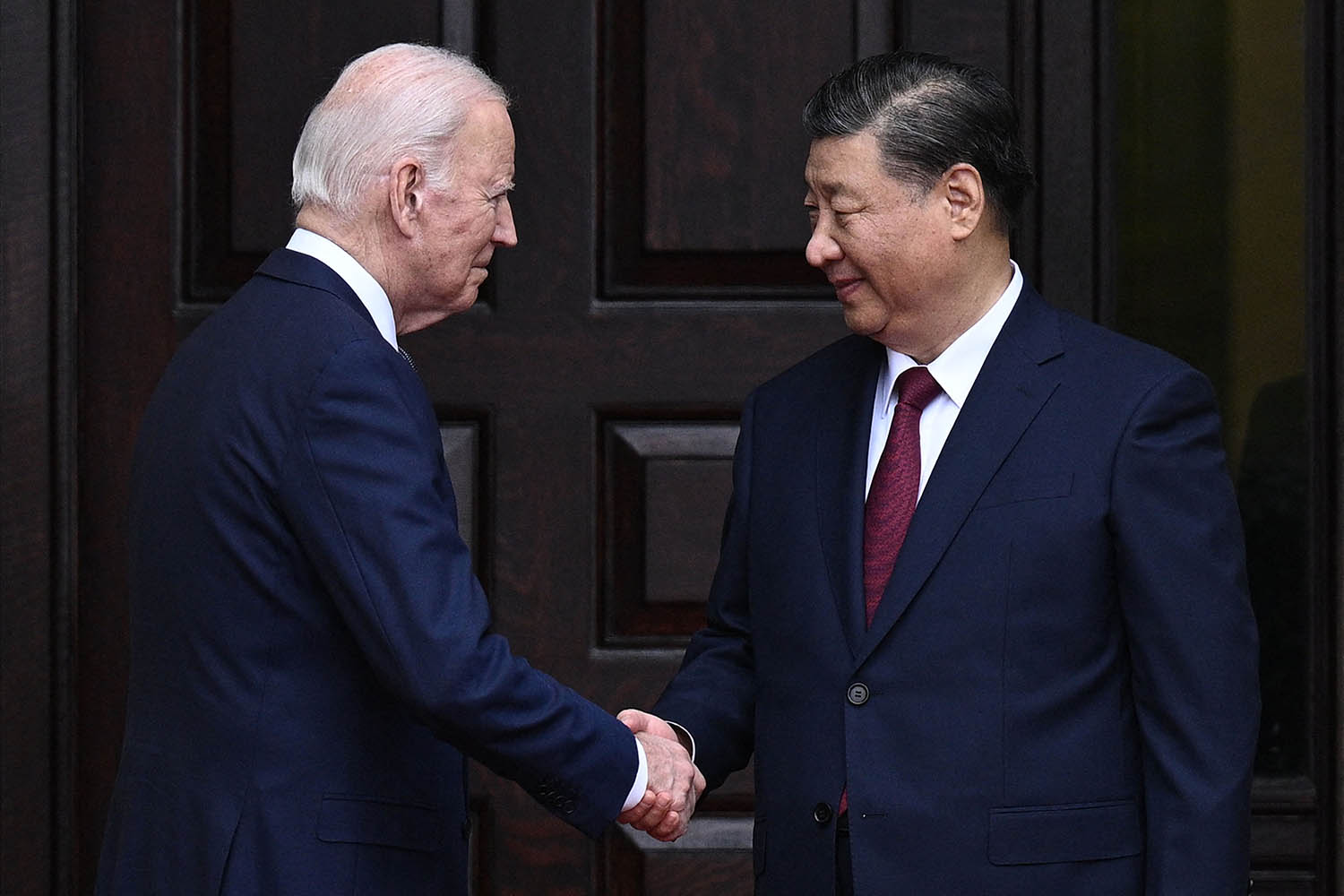
China is using AI to mimic local accents in misinformation intended to influence next year’s Taiwanese election, a US report said as Xi met Biden in California
As Xi Jinping crossed the Pacific on Tuesday for his first meeting with Joe Biden in a year, the junior US senator for Alaska posted a video message for Biden on X.
“No kowtowing,” said Dan Sullivan, a Republican, beside a pair of snowshoes. “The US is in the power position in this relationship. Don’t give that up.”
So what? Sullivan was right. For months, Chinese diplomats played hard to get on Xi’s behalf. He might travel to the San Francisco summit of Pacific nations, they said, or he might not. In the end he did, weakened by the past year.
- Chinese society is restive – last November Xi’s authority was challenged by the most serious anti-government protests since Tiananmen Square, and pensioners angered by reduced healthcare subsidies took to the streets again in February.
- The Chinese economy is hurting: after growing three times faster than America’s for four decades, China’s real GDP was likely negative last year and will probably be below 2 per cent in 2023.
- In January China’s population officially started falling for the first time in 60 years. India has since overtaken it as the world’s most populous country, and its median age is 28 to China’s 39.
Renewed access to western markets and high-end western technology is the most obvious fix for what ails Xi’s China, which is why the main event for his delegation to the Apec summit was a dinner last night attended by battalions of business titans from both countries.
Fentanyl for lunch. Meanwhile, the world’s most important geostrategic relationship got a reboot in four hours of talks in a Silicon Valley mansion where Xi and Biden were able to announce
- a resumption of military-to-military communications to reduce the risk of direct conflict;
- an agreement by China to curb shipments of fentanyl precursors to Mexico and the US, where opioid addiction has fed an epidemic of homelessness; and
- discussions on US export controls, Chinese diplomatic leverage over Russia and Iran, and Taiwan (more below).
Low expectations. Xi and Biden hadn’t even spoken by phone in the year since they last met, at the 2022 G20 in Bali; their advisors felt the slow-motion incursion into US airspace of a Chinese spy balloon last January and Nancy Pelosi’s visit to Taiwan as US House Speaker in August left them little to talk about. Expectations for yesterday were therefore carefully managed down.
High stakes. That couldn’t disguise the importance of the agenda. US-Chinese mutual economic dependence (“Chimerica”, in Niall Ferguson’s formulation) drove global growth for a generation after Tiananmen. That engine of prosperity is now tied down like Gulliver in Lilliput by US sanctions and export limits, Chinese curbs on its own tech sector, and mutual suspicion fuelled above all by the threat of war over…
Taiwan. Xi evinced “exasperation” yesterday over US media reports that he has set a deadline for absorbing Taiwan into mainland China. He said no such deadline had been set. But an annual congressional report on the US-China relationship, updated to coincide with the summit, accuses of China of
- planning to interfere with Taiwan’s 2024 presidential election;
- cutting communications to an outlying Taiwanese island 27 times in five years;
- using AI to mimic Taiwanese accents in online misinformation to obscure its origin;
- spreading fake statements on Taiwan purporting to be from White House spokespeople, and fake TikTok videos warning of US plans to provoke war with China.
After yesterday’s talks Biden was asked if he still considered Xi a dictator. He said yes. There were caveats, but they came too late. It was a head-in-hands moment for diplomats on both sides, but not necessarily a gaffe. Maybe someone had shown Biden the Dan Sullivan video.