Capital Economy, Business and Finance

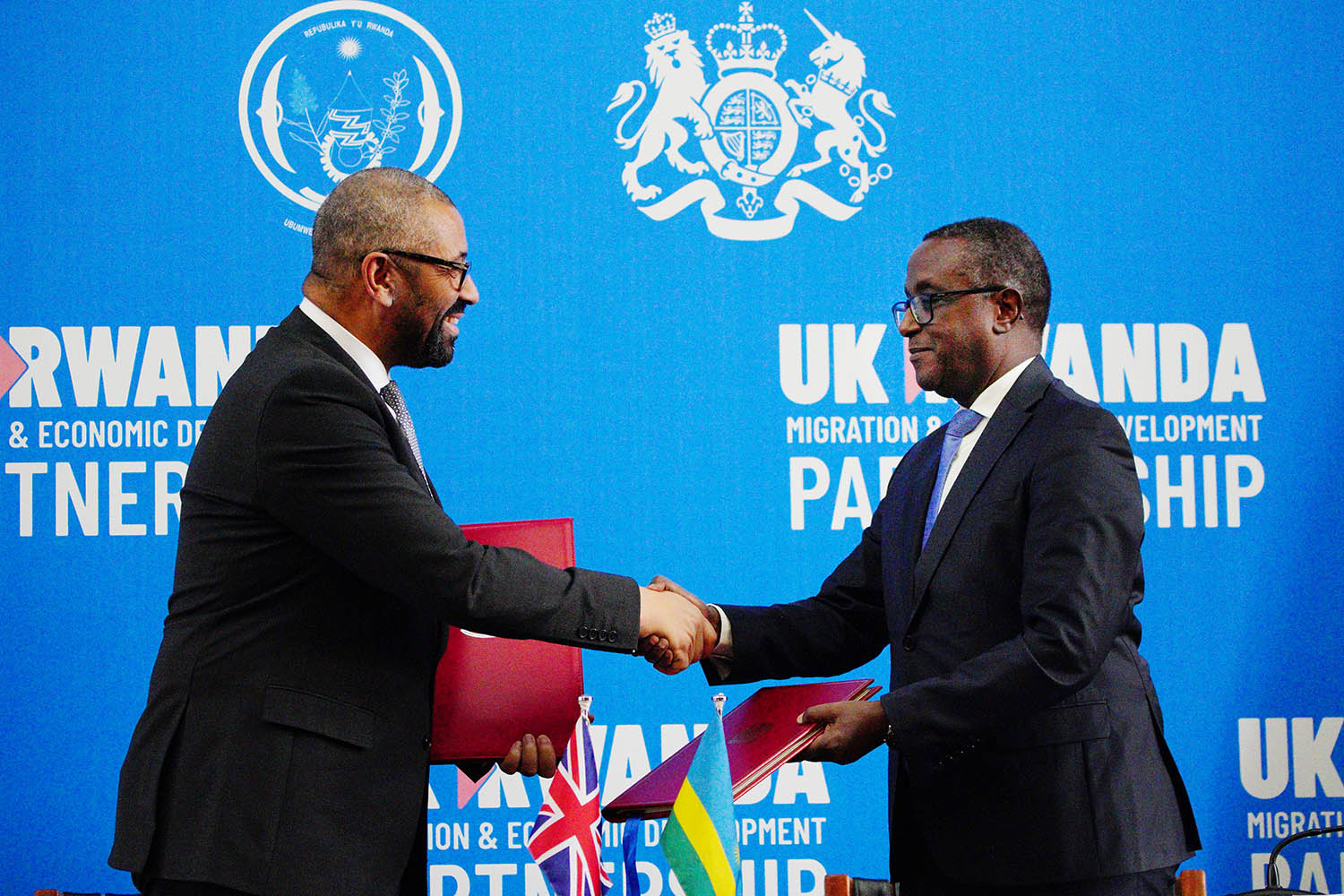
Yesterday James Cleverly, the home secretary, was in Kigali to sign a new treaty with the Rwandan government designed to revive the government’s plan to export asylum-seekers arriving illegally in the UK.
The newly-signed treaty will come with an additional price tag of £15 million paid out of the exchequer, according to The Times. But new rules aimed at cutting net migration to the UK by 300,000 a year present an even bigger headache for the Treasury.
Take the hospitality industry: if the new salary threshold for a skilled worker visa increases to £38,700 without conditions, it’s estimated by UKHospitality that 95 per cent of sponsored visas for chefs and managers granted last year would not qualify.
The rules could also have implications for tax revenues, borrowing and support for pensions.
Other measures include revising the Shortage Occupation List and raising the minimum salary threshold for a family visa from £18,600 to £38,700 – a move likely to be resisted, in both parliament and the courts, because of its impact on women and children despite only cutting overall net migration by the “low tens of thousands”, according to unpublished Home Office estimates.
“They clearly haven’t done any homework, research, consultation or impact analysis,” said Jonathan Portes, professor of economics and public policy at King’s College. “This isn’t based on any kind of economic rationale, it’s purely vibes and politics.”
Business is concerned about the forthcoming details of the bill. The CBI said: “An honest conversation about immigration would focus on how visa rules best support economic transformation and sustainable growth, beyond short-term fixes.”
There’s little doubt that the legal non-EU immigration that accounts for the bulk of net inward migration to the UK post-Brexit brings more dependents than pre-Brexit migration from EU countries. Most of that was accounted for by single workers able to return home often and at low cost.
Cleverly, who is rumoured to have once described the Rwanda policy as “bat shit”, is now trying to ram it through the UK courts after the Supreme Court rejected it last month because of the risk of asylum-seekers being sent back to an unsafe third country.
At the same time, plans are being made to introduce a UK law designating Rwanda as a safe country, undermining remaining legal arguments against the scheme and potentially giving the government the option of overriding the European Court of Human Rights.
Rwanda is laughing. Its police state has come under more scrutiny than it would like, but it has effectively bought the silence of a permanent member of the UN Security Council.