China’s giant property sector is teetering on the edge of a collapse that Beijing can’t afford.
A Hong Kong judge has run out of patience with China’s biggest and most indebted property company, and called in the administrators.
So what? The fate of the China Evergrande Group and its parent company’s vast portfolio of tower blocks and liabilities has become a key test of
- Hong Kong’s ability to assert its jurisdiction in mainland China;
- Hong Kong’s ability to collect for foreign investors in mainland China; and
- Beijing’s support for aggrieved homebuyers and its willingness to let big businesses go to the wall.
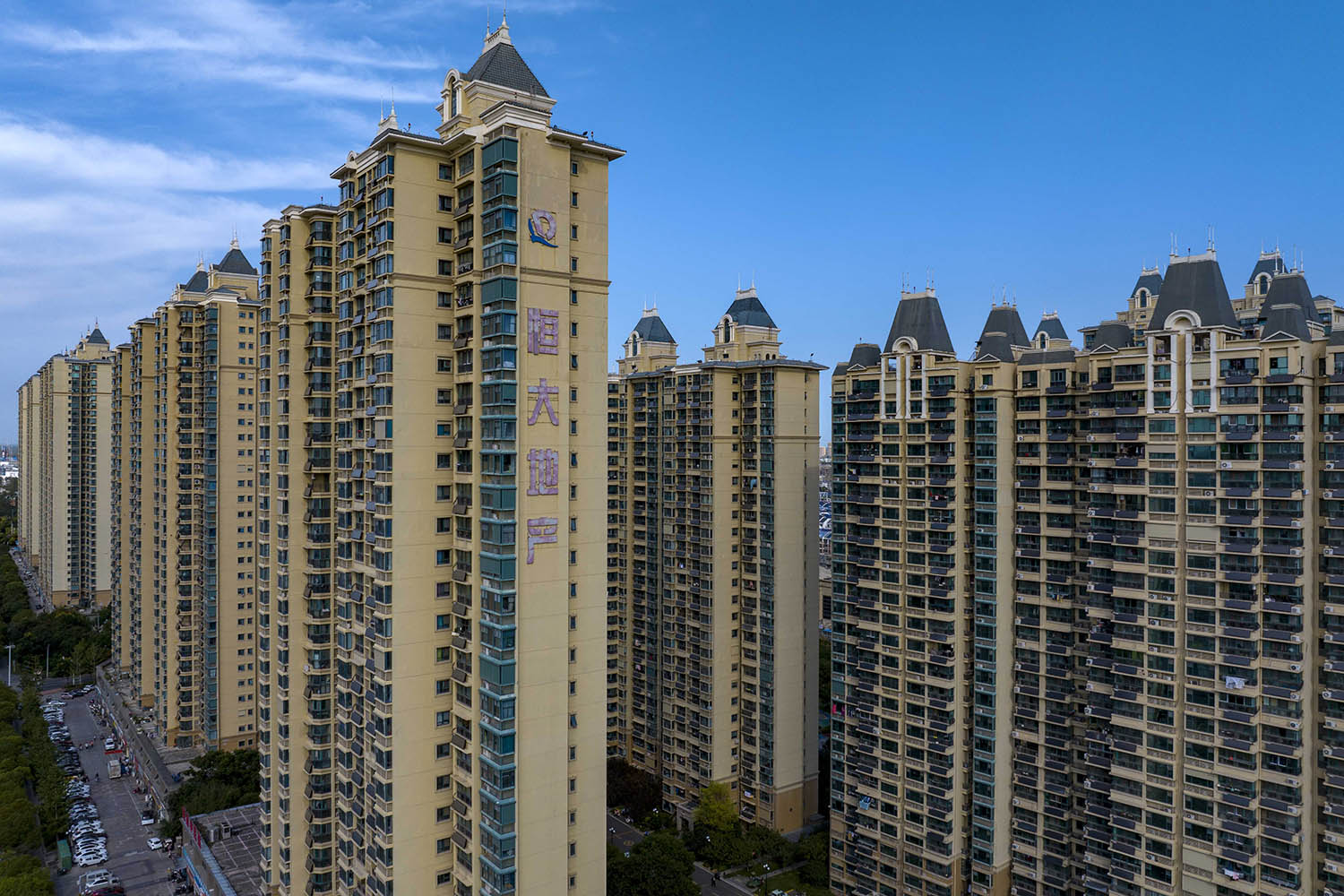
How big? Huge. It’s hard to overstate the scale of Evergrande within the Chinese property sector, or of the sector within the Chinese economy. Real estate accounts for 25 – 30 per cent of China’s GDP. Evergrande has an estimated $300 billion in debts and $240 billion in assets – numbers which could grow if the administrators appointed yesterday by Judge Linda Chan get full access to the books of the company’s dozens of mainland subsidiaries.
Furthermore:
- China’s second-biggest developer, Country Garden, is close to $200 billion in debt and could face a similar winding-up order in Hong Kong.
- Both companies have already defaulted on their loans and the same is true for more than 50 smaller Chinese developers.
- About 20 million pre-sold homes stand unfinished across China, and public faith in property as a store and incubator of wealth is shattered.
Urban outfitters. Evergrande is an outgrowth of two phenomena:
- i) breakneck urbanisation that’s created 225 Chinese cities of more than a million people (compared with 35 in Europe), and which accounted for the startling fact* that China used more cement between 2011 and 2013 than the US did in the whole of the 20th century; and
- ii) the mutual dependence of local governments (as land sellers) and property developers (as land buyers), based on an expectation of an endless property boom.
Urbanisation continues, albeit slowed by job shortages in construction and logistics and by middle-class families moving out of “top-tier” cities in search of cheaper housing.
The boom, meanwhile, has bust.
Icarus Towers. As property supply raced ahead of demand in 2020, Beijing intervened to prevent a bubble by imposing strict new borrowing limits on developers and caps on the number of housing units individuals could buy off-plan. The intervention worked too well.
- Mortgage volumes shrank last year after growing by more than 10 per cent a year for almost two decades.
- Evergrande’s sales slumped by nearly 40 per cent in 2021 and by a further 90 per cent in 2022.
- China is left with half-built “ghost cities” that Nomura Securities estimates would cost $450 billion to complete.
Two systems, two goals. Beijing is now having to balance the need to deleverage the property sector while avoiding a financial crisis and finding a way to get millions of pre-sold homes finished.
The decision to let Hong Kong call time on Evergrande won’t have been taken without Xi Jinping’s approval, says Yang Jiang, a senior researcher at the Danish Institute for International Studies. A full implosion of the property sector would lead to mass bankruptcies and joblessness. “The Communist Party sees economic crisis as a big factor in social instability” – which it abhors.
One city. In principle Judge Chan’s order applies only to Evergrande’s Hong Kong holding company. Whether in practice its writ runs in Guangzhou, where the group is headquartered, is the big question the administrators have to answer. They may get help from Xi, who saw foreign direct investment in China collapse by 47 per cent in 2022 and needs to repair investors’ faith in the mainland if that is to recover.
The movie. It hasn’t been made yet, but Evergrande’s chairman, once China’s richest man, is under investigation for “illegal crimes”, whereabouts unknown.
*Highlighted by the historian Vaclav Smil based on data from the International Cement Review and the US Geological Survey