Sensemaker Daily

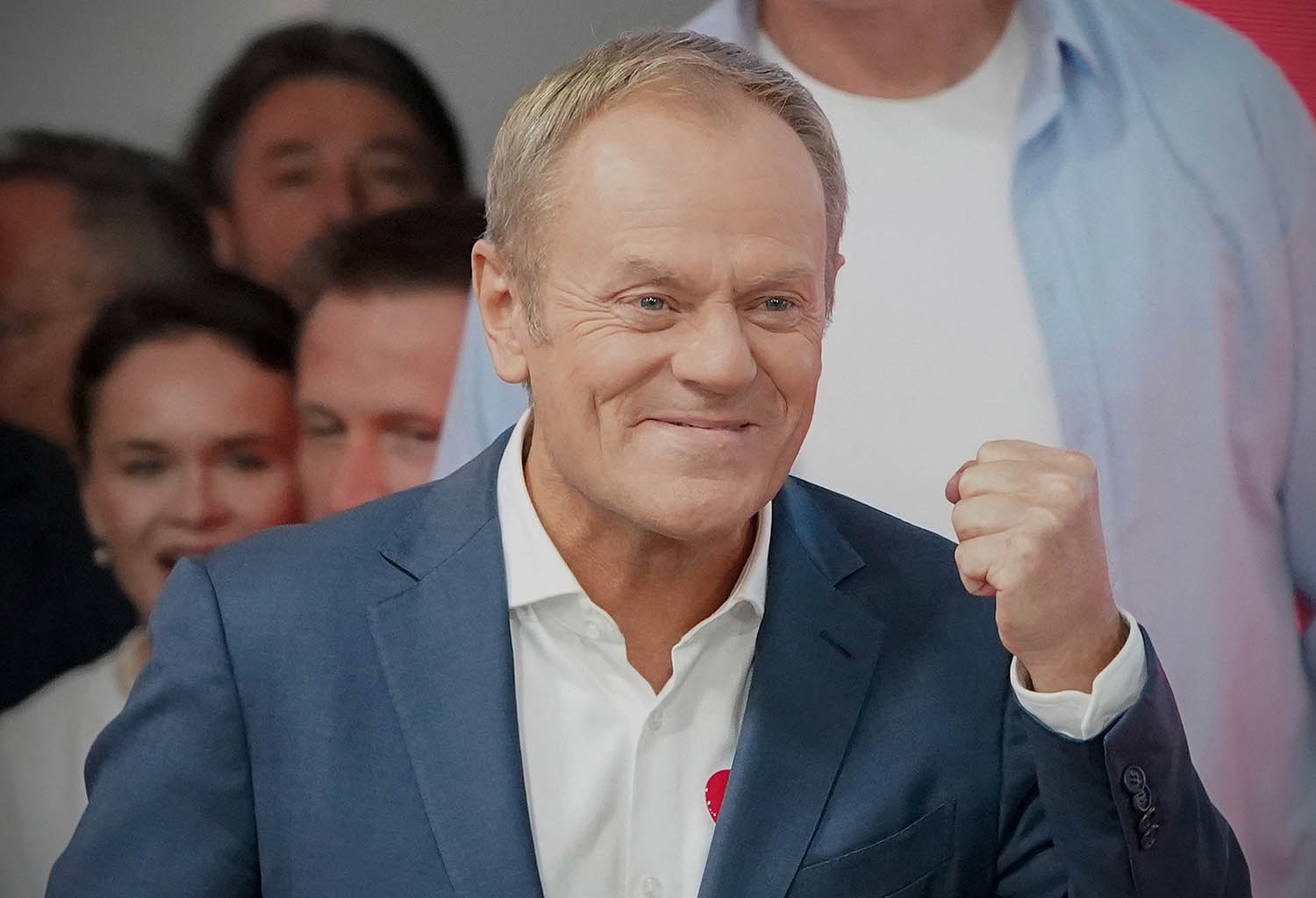
Poland's newly re-instated Prime Minister Donald Tusk is trying to release Poland from the grip of the hard-right. Its populist president is trying to stop him. What's going on, and what's at stake?
Donald Tusk returned to power in Poland two months ago after eight years’ rule by the right-wing Law and Justice party (PiS). He promised to bring democracy back to Poland and Poland back to Europe, not least in terms of
- judicial independence;
- press freedom; and
- free and fair elections.
So what? It’s proving hard. Tusk and his centrist coalition are being opposed at every step by President Andrzej Duda and allies in the PiS. More than €100 billion in EU grants, loans and cohesion funds are still being withheld by the European Commission, and political infighting in most government departments has brought Poland to what one senior official calls its deepest crisis since independence.
Is that it? No. If liberal democracy can’t fight back in Poland, it will be on life support from Gdansk to Bratislava. The EU’s greatest accomplishment since the Cold War is at stake.
Forewarned, forearmed. Part of this was planned. Tusk took office as prime minister intending to “demine” all the booby-traps left by the PiS in one go rather than drag the process out, Aaron Korewa of the Atlantic Council says. That meant confronting the opposition on several fronts at once.
There have been fireworks:
- Duda has used his presidential palace to give refuge to two PiS MPs facing prison sentences after being convicted of abuse of power.
- The country’s top prosecutor has been dismissed by the new government despite protests from Duda that the decision was taken without his approval.
- Tusk’s new justice minister needed police protection to enter the national public prosecutor’s office because of a demonstration outside by PiS activists.
- The new government has fired senior managers from major media outlets including public TV and radio broadcasters and the state news agency, prompting a furious reaction from conservatives including Yaroslaw Kachynsky, the PiS leader.
President’s move. Duda has called Tusk’s actions illegal and accused him of creating anarchy. He’s also vetoed a 2024 spending bill allocating around €700 million for publicly-funded media, even though previous PiS budgets earmarked similar sums. Tusk in turn has accused Duda of misusing his veto to cut teachers’ wages and warned Duda that he will “restore the legal order, whether [Duda] likes it or not”.
No no-brainer. Tusk has overwhelming backing from young, pro-EU voters, but that doesn’t make rolling back years of PiS misrule straightforward. His task is to stay within the law while restoring the rule of law.
- In the judiciary, his government is by and large succeeding: his justice minister is credibly seeking to disperse power rather than consolidate it.
- In the media, not so much: he has yet to convince Poles the government is done with meddling.
Campaign mode. Duda will be in power for another year and a half, with a veto over legislation and a right to dismiss parliament and call snap elections. If new elections were called the PiS would be unlikely to win because it can count on a vote share of only about 30 per cent. But it’s the biggest single party and with local elections due in April, Poland is still in campaign mode.
Collateral damage. The more time the president and government spend on domestic infighting, the less they can devote to national security issues and aid to Ukraine, on which for now they are united – and not in a good way for Ukraine. Ukrainian grain is banned in Poland and Ukrainian trucks are blocked at Polish border crossings. Polish agriculture may be one beneficiary; Russia is another.
So stop fighting. If Poland wants to play a leading role in Europe it has to start looking professional again, Korewa says. One way to do that would be to become a dependable champion of the Ukrainian cause, reestablish EU rules on judicial and media independence, and stick to them. What’s more… the cash dividend in unfrozen EU funds would be equivalent to more than a sixth of Poland’s GDP.


