Capital Economy, Business and Finance

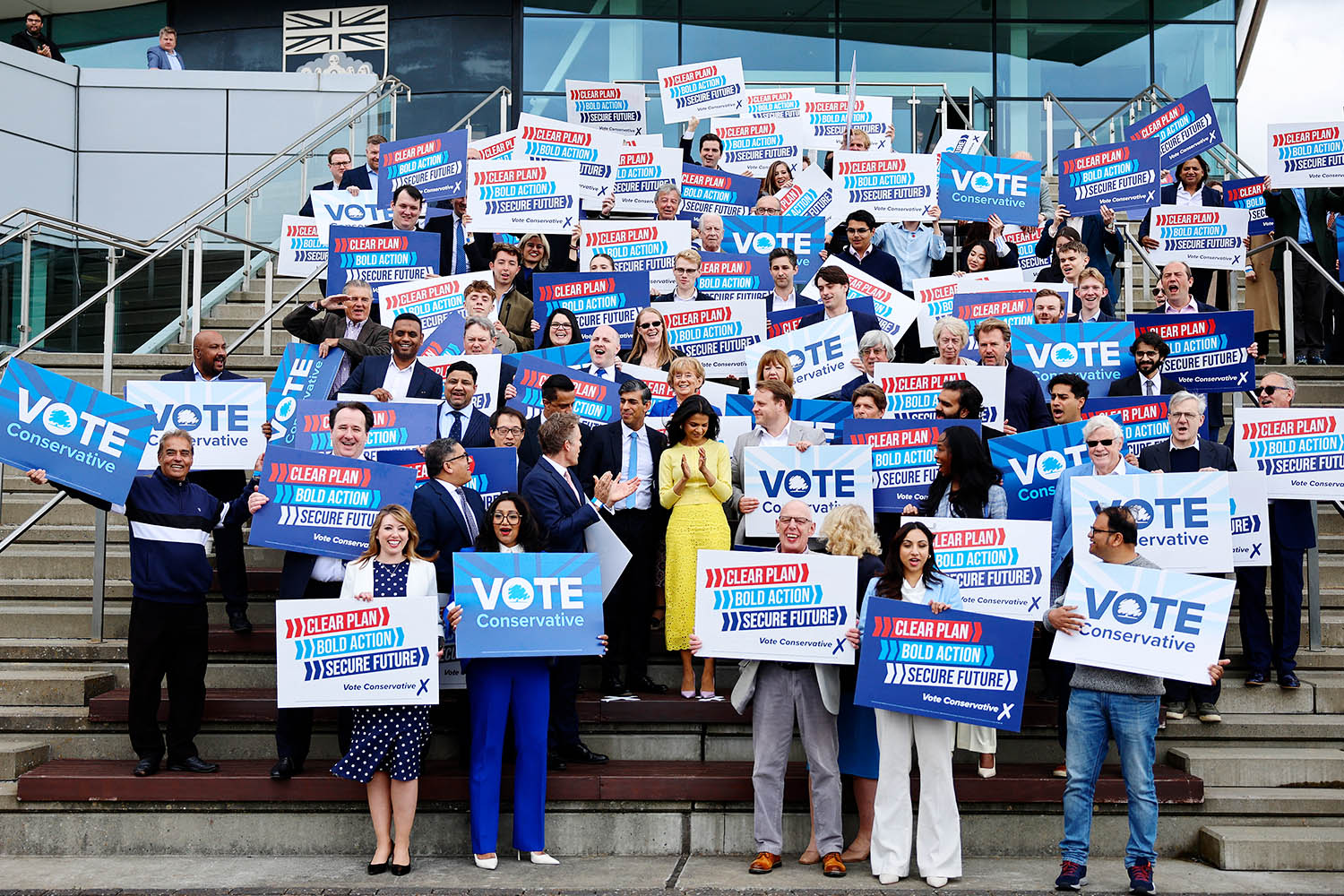
Rishi Sunak has made a big play of promising British voters that a Labour government would raise taxes, while the Conservatives would cut them. The word tax featured 27 times in his manifesto launch on Tuesday, and Sunak repeated the (heavily disputed) line about Labour’s £2,000 hike.
Pledging tax cuts of more than £17 billion, alongside a rise in defence spending, Sunak hopes a) to be taken seriously and b) to move the dial on polling day. He is unlikely to do either.
According to the manifesto, these spending plans would be paid for by a £12 billion cut in welfare spending and a £6 billion crackdown on tax avoidance. The independent Institute for Fiscal Studies (IFS) said the former measure was “difficult to the extreme”.
Paul Johnson, IFS director, noted that while the spending was a “definite” cost, the savings are drawn from “uncertain, unspecific and apparently victimless” areas, including disability benefits.
When it comes to tax avoidance, Johnson was even more lukewarm, casting doubt on whether the theoretical £6 billion could be raised. The problem for the UK electorate is that Labour, too, is planning to fund its policies in part from cutting tax avoidance.
Neither party’s plan can be entirely discounted – billions have been raised by going after unpaid taxes – but neither can be seen as an accurate estimate.
As the IFS and others have pointed out, both parties are failing to acknowledge reality: the cost of the state is going up and difficult decisions loom.
Watch out for Tortoise’s in-depth analysis of the major parties’ manifestos on Friday.