Sensemaker Daily

World oil prices ticked up as missiles headed towards Jerusalem and Tel Aviv on Tuesday night, but they’re still at their lowest in nine months. Saudi Arabia’s oil minister has meanwhile told Opec they could soon fall by a third to $50 a barrel.
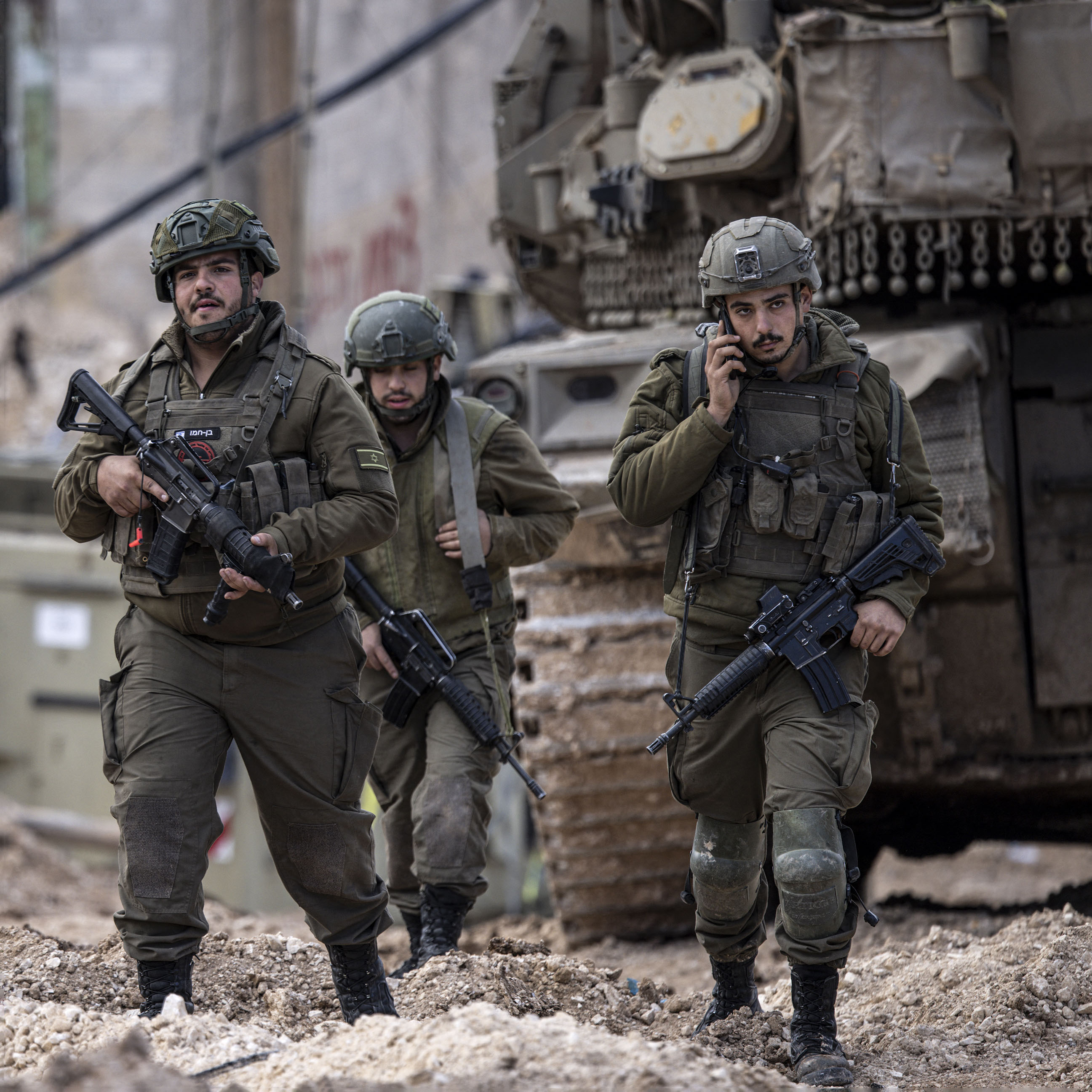
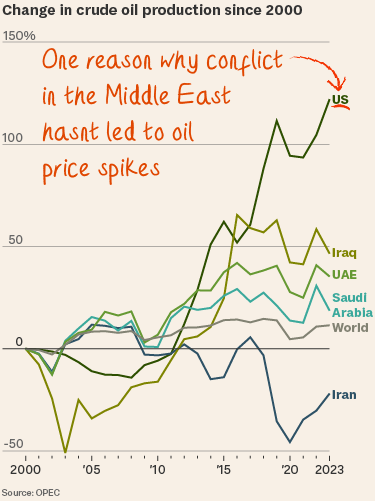
So what? This is not normal for a time when Iran and Israel appear to be gearing up for war. Historically, prices would be spiking as traders worried about a showdown between the US Fifth Fleet and Iranian gunboats in the Strait of Hormuz. So what gives?
- Supply. There’s a global oil glut thanks to US shale, overproduction by unruly Opec members and Russia’s need to sell at any price.
- Demand. It’s slipping, or at least levelling off, most notably in China.
- Saudi Arabia. It’s determined not to lose market share to countries willing to ignore Opec agreements, even if that means increasing output and selling at tight margins.
Opec-ing disorder. Founded in 1960 in Baghdad, Opec exists to sustain oil prices for its members by controlling their output. As long as those members include the world’s biggest producers and they trust each other, the mechanism works. When they don’t – as now – it doesn’t. Opec accounts for a steadily shrinking share of world oil supply, down 3 per cent in two years to 48 per cent.
- Fracked off. The world’s biggest oil producer is currently the US, and it’s not in Opec. The cartel responded to the North American fracking revolution in 2014 with a price war that it lost when cut-price Opec competition simply forced the frackers to be more efficient.
- Sealed off. The world’s second biggest oil producer is Russia. It’s an Opec+ member, meaning it supports Opec in principle but writes its own rules in practice, for instance when sanctioned for invading Ukraine. To sustain its war economy it has been forced to sell to India at under $60 a barrel – a 20 per cent discount on current world prices.
Switched off. Iraq (Opec), Kazakhstan (Opec+) and Brazil (Opec+) have also been ignoring planned voluntary production cuts. At the same time those countries that have been observing them have paused production capacity equivalent to between five and eight million barrels of oil a day, which brokers know can be brought quickly back onstream.
Barrel roll. Nowhere can oil output be increased faster or more cheaply than in Saudi Arabia, which last week indicated it would do just that, starting in December, confident it can outlast rivals in a price slump.
Virtue of reality. Other things being equal, Riyadh would like to keep oil at its budgetary break-even price of $100 a barrel – but other things are not. “Oil has been on a downtrend since June,” says Bill Farren-Price of the Oxford Institute for Energy Studies. Demand forecasts for the US and Europe as well as China were sharply downgraded last month by the International Energy Agency, and Saudi is trying to make the best of it.
That means
- persisting with earnest efforts to diversify away from oil dependency, including by building a $1.5 trillion city in the desert and investing prodigiously in AI; and
- funding the transition with savings (mainly from a $925 billion sovereign wealth fund) and debt if oil revenues don’t suffice.
Win, win then? Yes and no. Unlike Iran’s, Saudi Arabia’s strategy for asserting itself as a regional power is not in tatters. For what it’s worth, the NYT’s world affairs editor Thomas Friedman includes Saudi Arabia in a “coalition of inclusion” of countries that accept US leadership in attempting to solve global problems. But it still bans protest and jails dissidents and could see a quick end to easy money if oil did fall to $50 a barrel.
Bigger picture, better picture? Possibly. Normally when oil prices fall, consumption rises, but last week Bloomberg New Energy Finance and Climate Analytics forecast global CO2 emissions would peak this year.
What’s more… Low oil prices tend to benefit incumbent parties in US elections.