
Geopolitics trumps politics as business adapts to the big US-China pull-apart
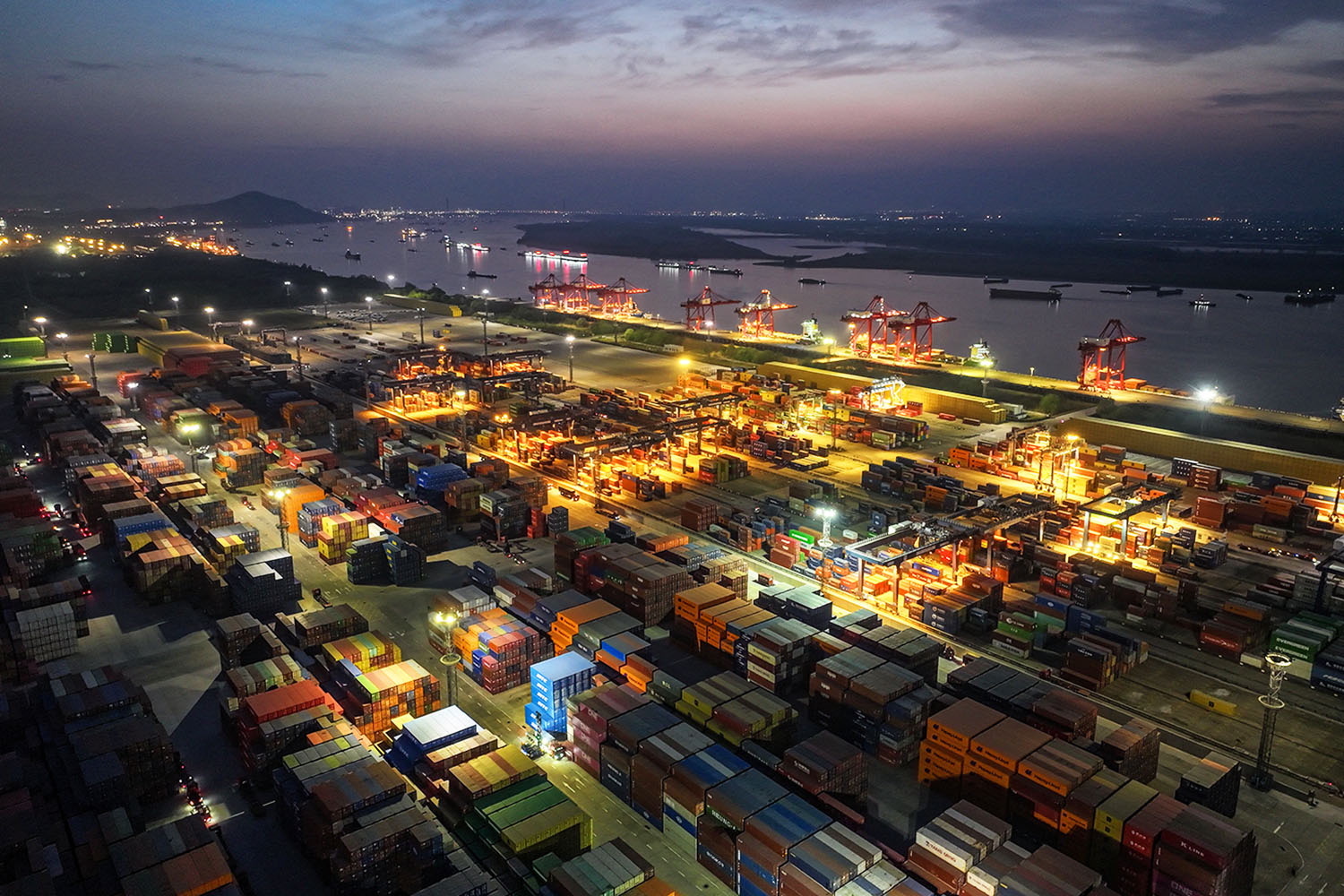
HSBC, Europe’s largest bank, is embarking on its biggest restructure in a decade and will split most of its operations according to whether they serve ‘Eastern’ or ‘Western’ markets.
So what? The bank’s new boss, Georges Elhedery, has come face-to-face with geopolitical reality. Relations between Beijing and Washington are heading in one direction regardless of who wins the US election. The split into hemispheres is a pre-emptive bid to
- defend against further calls from Ping An, the Chinese insurer and the bank’s largest shareholder, to spin off HSBC’s Asian business, which accounts for three-fifths of its profits;
- immunise the wider bank if sanctions are brought against China’s banking sector (or its economy continues to decelerate); and
- cut around $300 million in costs as profits from higher interest rates begin to taper.
Xi Jinping’s record of meddling with China’s tech sector and imposing new requirements on western firms with little warning has probably provided an extra incentive.
Caught in the crossfire. HSBC has long been the corporate frontline of tensions between China and the West.
- In 2016, the bank cooperated with US prosecutors to hand over information on one of its Chinese clients, Huawei, which led to the arrest of the company’s chief financial officer in Canada two years later.
- In 2019, during pro-democracy protests in Hong Kong, Chinese state-owned companies cut back business with HSBC. The bank later endorsed Beijing’s decision to impose a draconian national security law on Hong Kong, where it currently employs 50,000 staff.
- Now, the restructure has rekindled debate over Ping An’s failed spin-off attempt. Rajiv Jain, founder of top-20 shareholder GQG Partners, has been quick out the gate calling for an eventual break up as the only “cure” for sanctions against the Chinese banking sector.
“I would say it’s smart, but it doesn’t go all the way,” says Alicia Garcia Herrero, Chief Economist for Asia Pacific at Natixis. “It doesn’t fully protect them, actually, from geopolitical risk. For that, you need to separate the two entities, with separate listings.”
So why the overhaul? Costs are a major factor. Expenses consume just under half of HSBC’s income. If interest rates fall to 3 per cent in 2026, Barclays predicts the bank will need to make $1.4 billion of cost-saving measures to maintain a decent return on equity. Elhedery’s streamlining strategy includes
- creating two standalone geographical units based in London and Hong Kong, as well as a new division that deals with corporate and institutional banking, and an international wealth and premier banking unit;
- trimming its executive committee from 18 to 12; and
- appointing the bank’s first ever female chief financial officer, Pam Kaur.
What’s in store for HSBC’s other 214,000 employees isn’t clear. The bank’s share price has barely budged since announcements on Tuesday, as analysts await more details.
The China conundrum. If a full break up of HSBC ever becomes a political necessity, splitting operations makes that easier. And it’s not the only company getting prepared:
- AstraZeneca drafted plans in 2023 to break out its Chinese drug production business as a shield against rising tensions, according to the FT.
- Bain & Company has separated the data from its Chinese and global operations in response to more stringent Chinese anti-espionage laws.
- Sequoia Capital has fully split off and rebranded its China and India businesses citing potential conflicts of interest.
What’s more… ASML, the Dutch supplier of chip-making kits, had its worst day on the market in 26 years last week, due partly to US-led export controls, as it estimated sales to China would fall by 27 per cent in 2025. It’s not just the “world’s bank” that’s worried about what’s next.