Markets in 2025 will be a tug of war between sentiment and fundamentals, Trump and the Fed.
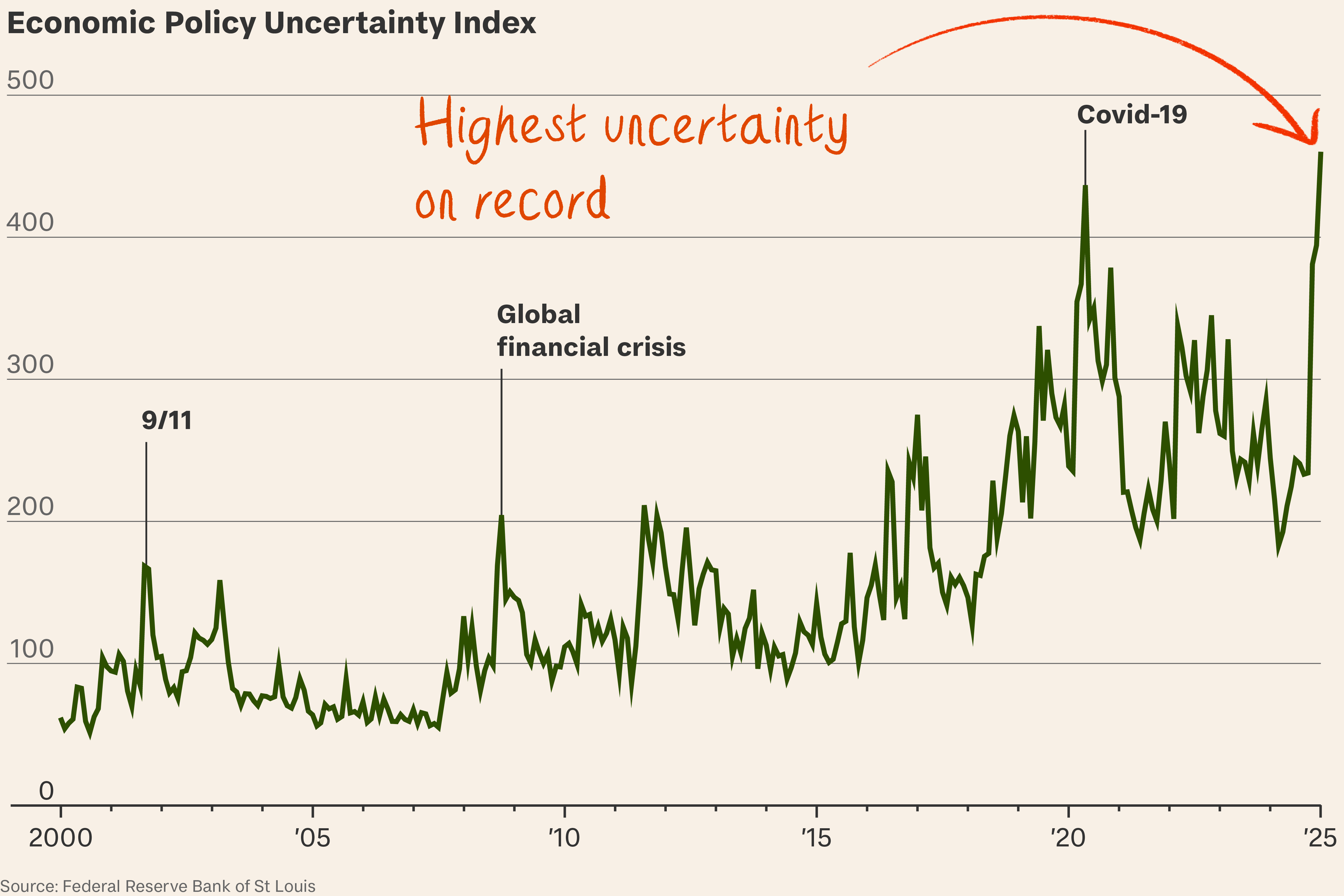
The dollar jumped and markets took a plunge on Wednesday after the Fed intimated that “policy uncertainty” under Trump 2.0 might rekindle inflation and slow the pace of interest rate cuts.
So what? The bigger question is whether this is just a blip in a blistering bull run for US stocks. As things stand, an end to the bonanza in early 2025 would be bad for investors globally. In the last few months, foreign capital has been flooding into the US stock market at an historic rate.
Measured by the FTSE Global All Cap Index
- 65 per cent of the global equity market is held in US stocks, their highest weighting in history.
- 5.5 per cent is held in the second largest market, Japan.
- 3.4 per cent is held in UK stocks, smaller than the 3.5 per cent held in one company: Nvidia.
Bubble? It’s a contentious term. What’s clear is that US stocks aren’t cheap. Deutsche Bank research says the last time adjusted price-to-earnings ratios for the S&P 500 were this high was before the dot com crash. That too was a rally driven by technology and intangibles.
In 2023, valuations of the Magnificent 7 tech companies doubled and they’re up another 60 per cent so far this year. “If the US equity market remains as concentrated and narrow as it has been for much of this year, that would be historically abnormal,” says Michael Hartnett, chief investment strategist at Bank of America.
What might pop it? There are a few scenarios:
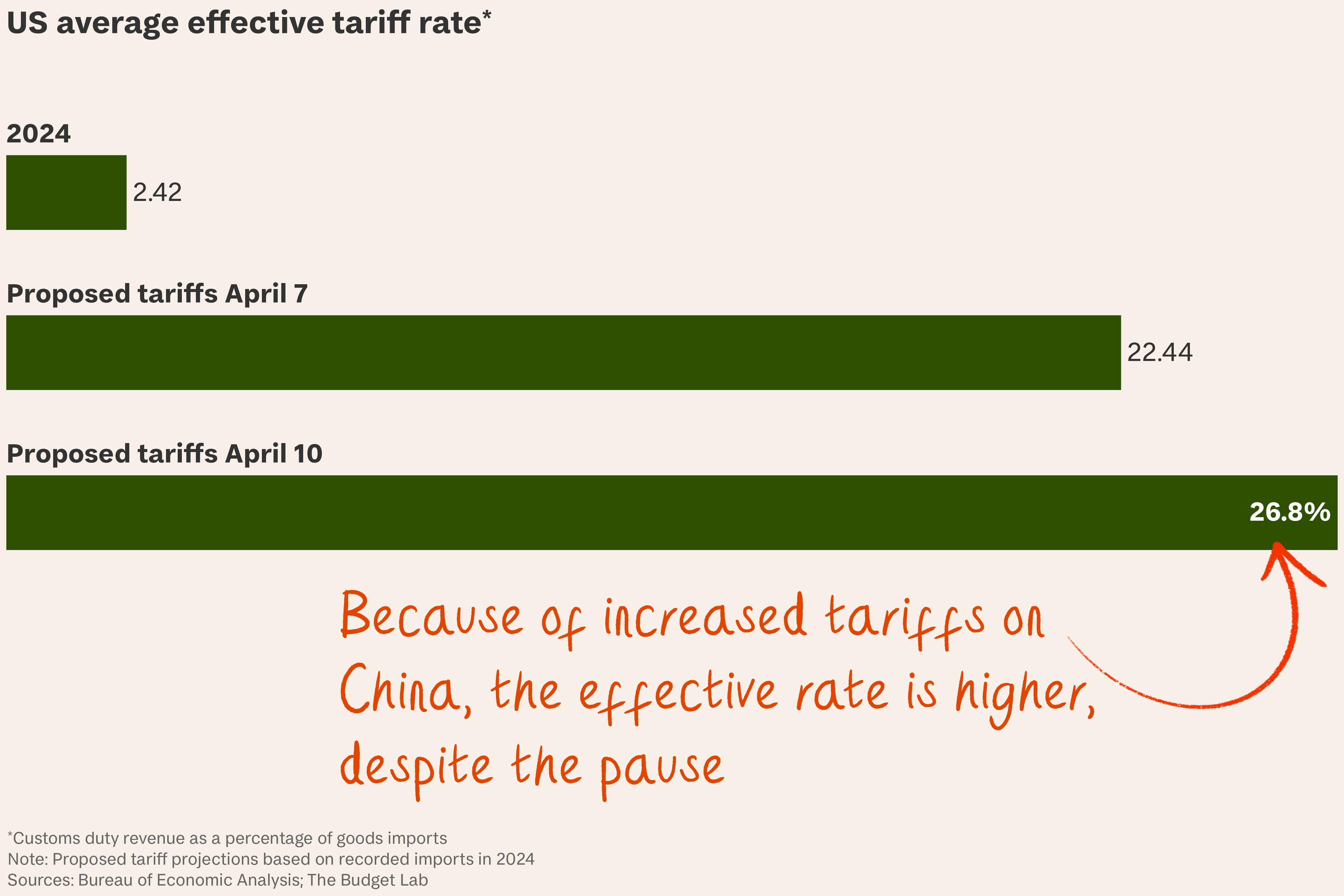
- Inflation rebounds. It’s happened before. After the oil crisis in 1973, inflationary pressures began to build before another energy price shock hit in 1979. The obvious catalyst for round two this time is if Donald Trump follows through on his rhetoric of maximum tariffs. Geopolitical risks are everywhere and it would be foolish to rule out more black swan inflationary events in 2025.
- The Fed goes full hawk. Since 2022, markets have consistently mispriced the Fed’s tendency to stick rather than cut. Fed projections now imply just two quarter-point rate cuts in 2025, down from four previously. Are higher rates the new normal?
- Bond vigilantes return. US national debt is on course to exceed the highs of World War Two within the next three years and Trump says he wants to extend tax cuts beyond 2025. Fiscal consolidation is out of fashion, at least politically, as demonstrated by Michel Barnier’s failed attempt to rein in France’s budget. At what point will US bond investors spook? The yield on 10-year Treasuries has now surged to 4.4 per cent, up from 3.7 per cent when the Fed started cutting.
Exponential and exceptional. The bull case says this time is different. “People believe these are high quality, large cap, monopolistic companies that aren’t going away,” Hartnett notes. “Whereas often you find in historic bubbles the speculation is in very low quality assets.”
The US economy is humming along, corporate earnings have been strong and alternative investment destinations – in Europe, Asia or elsewhere – simply don’t have the same force of innovation. Tech, it could be argued, has always been the lifeblood of America's Goldilocks economy.
But it should still be a concern how concentrated markets have become, by both geography and sector. The adage that a rising tide (the US) lifts all boats (the global economy) doesn’t seem to apply this time around.
What really matters is how the policies of Trump and the Fed interact come 20 January. The degree and timing of tariffs, tax cuts and curbs on immigration could all impact inflation and the value of US stocks. In the meantime, sentiment and animal spirits rule.