Sensemaker Daily

His fellow heads of state are being urged to make him think again
It’s ten days since President Trump suspended all but “life-saving” US aid work across the developing world by executive order. Assessments of its impact aren’t getting any better.
So what? They are getting worse. “It’s very bad,” says the head of a major international charity in New York. “It’s a disaster,” says the head of a smaller one in London. “It’s chaos,” says an NGO director responsible for disbursing more than $1 billion a year.
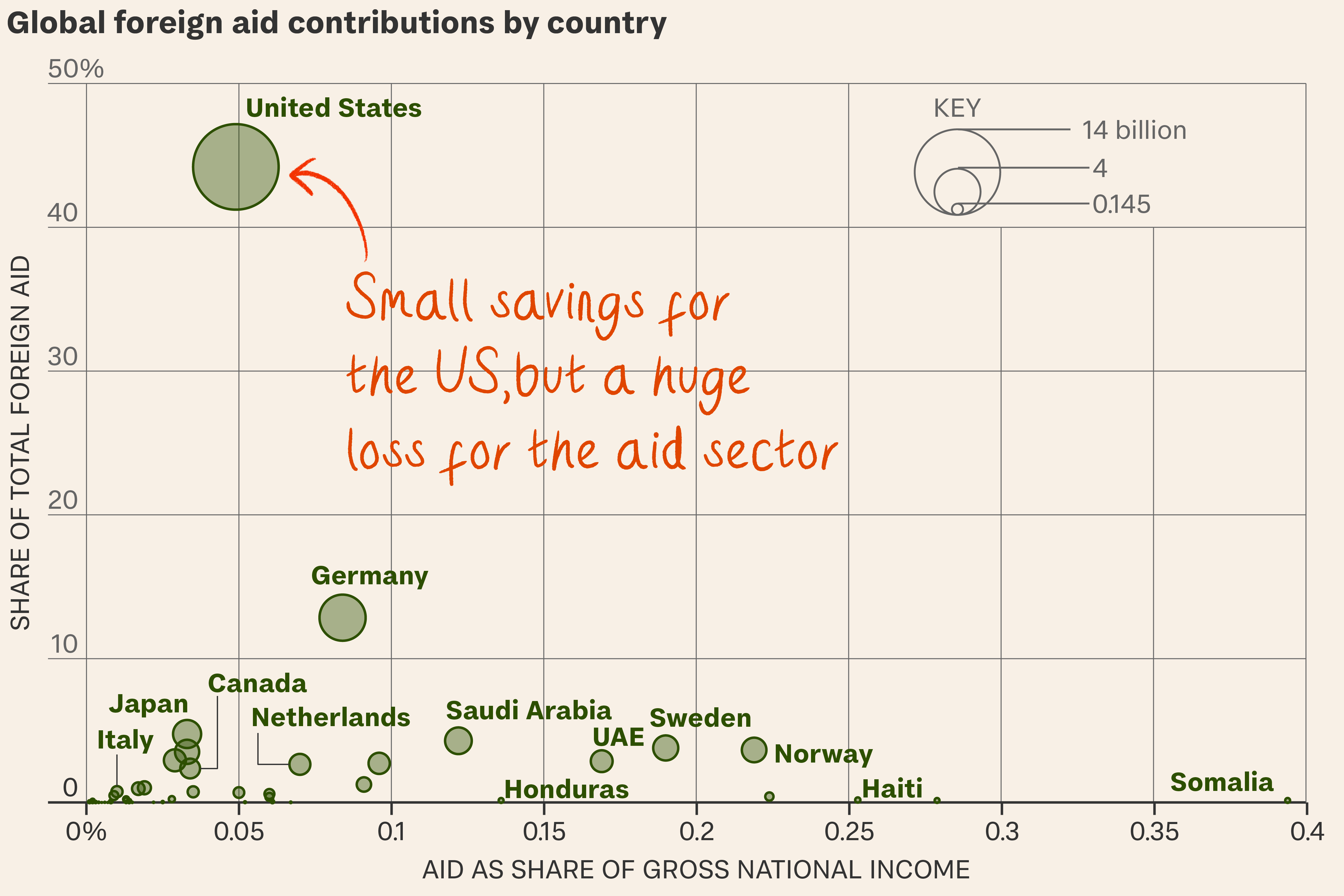
The US is by far the world’s biggest donor of humanitarian and development aid, totalling $60 billion last year. The stop-work order issued by Trump on day one of his presidency has upended the sector and left millions at risk.
The scale of the impact is vast. Half of all humanitarian aid is US-funded. 20 million people with HIV in Africa are immediately affected because their medicines are distributed by the US Pepfar scheme. More than half the World Food Programme’s funding comes from the USAID. Until ten days ago the agency also
- supported 100,000 Rohingya refugees in Bangladesh,
- funded mine-clearing programmes in Syria, Myanmar, Ukraine and Afghanistan,
- paid for counter-terrorism training and weapons storage in Somalia,
- funded 47 per cent of UN emergency response efforts in Sudan and 70 per cent of those in the DRC,
- contributed $380 million a year to counter-narcotics efforts in Colombia,
- funded maternal healthcare and child vaccination programmes in 25 of the world’s poorest countries,
- paid for mobile medical units serving frontline communities in Ukraine, and
- helped restore Ukrainian food exports to pre-war levels with loans, seeds and new granaries on the Black Sea.
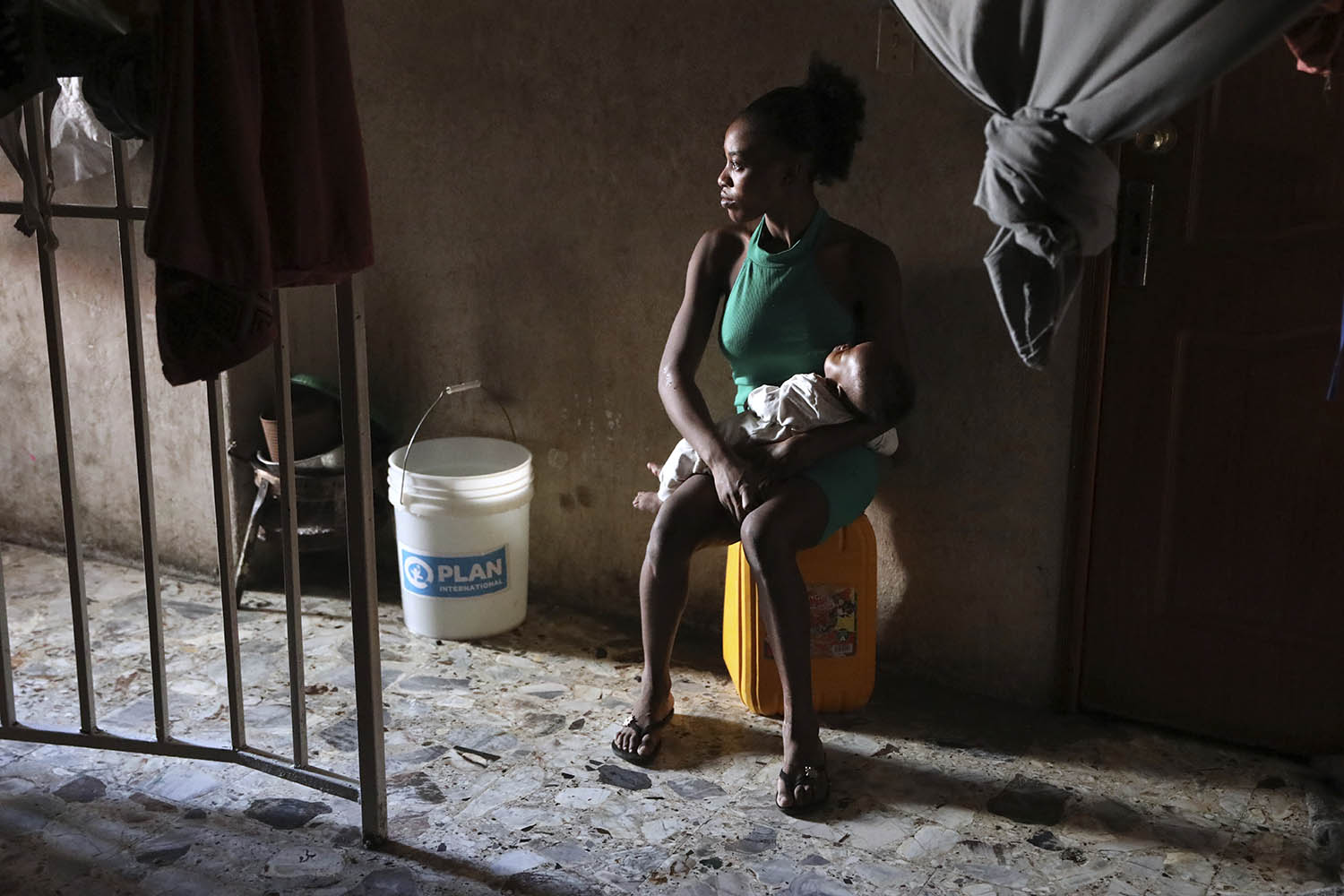
Certain projects such as critical healthcare schemes in Haiti – a source of illegal migration to the US – are expected to be allowed to resume, but hundreds more remain suspended.
The reaction from NGOs funded or part-funded by the agency has been stunned but largely anonymous because they’ve been barred from commenting publicly on executive orders or even talking about them with USAID personnel.
Behind the scenes a “huge mobilisation” is under way to persuade heads of state and foreign ministers to lobby Marco Rubio, the new US Secretary of State, to reverse most of the suspensions when the current 90-day review period ends. The chances aren’t good.
American interests. A long tradition exemplified by the post-war Marshall Plan holds that a broadly-defined self-interest serves the US better in the end than a narrow one.
- 11 of the top 15 US trading partners were aid recipients once – South Korea notable among them – which is why Samantha Power, USAID administrator for President Biden, called aid America’s “superpower”.
- Trump begs to differ. His order stated that the US “foreign aid industry and bureaucracy” weren’t “aligned with American interests” and were “in many cases antithetical to American values”. Rubio said the order wasn’t meant to be destructive but that the US was “no longer going to blindly dole out money with no return for the American people”.
Results hailed by the new administration on Wednesday alone included an end to US funding for clean energy projects in Fiji and family planning schemes across Latin America.
China syndrome. If Rubio proves unpersuadable and the temporary suspensions prove permanent, “Beijing will be overjoyed,” says Tom Kellogg of Georgetown University’s Center for Asian Law. A senior charity director says the lesson of Afghanistan, South Sudan and Syria is that whether it’s China or Russia that steps in, “the US is going to lose credibility”.
What’s more… In Afghanistan, if US-funded primary education schemes for boys and girls are cancelled it will play into the hands of the Taliban, which wants girls excluded from school anyway.